


 Publish
 Videos
 Articles
 Events
 EN
 1080P 1080P
Add to Channel Download Photo Album 4 Report
Playing issue
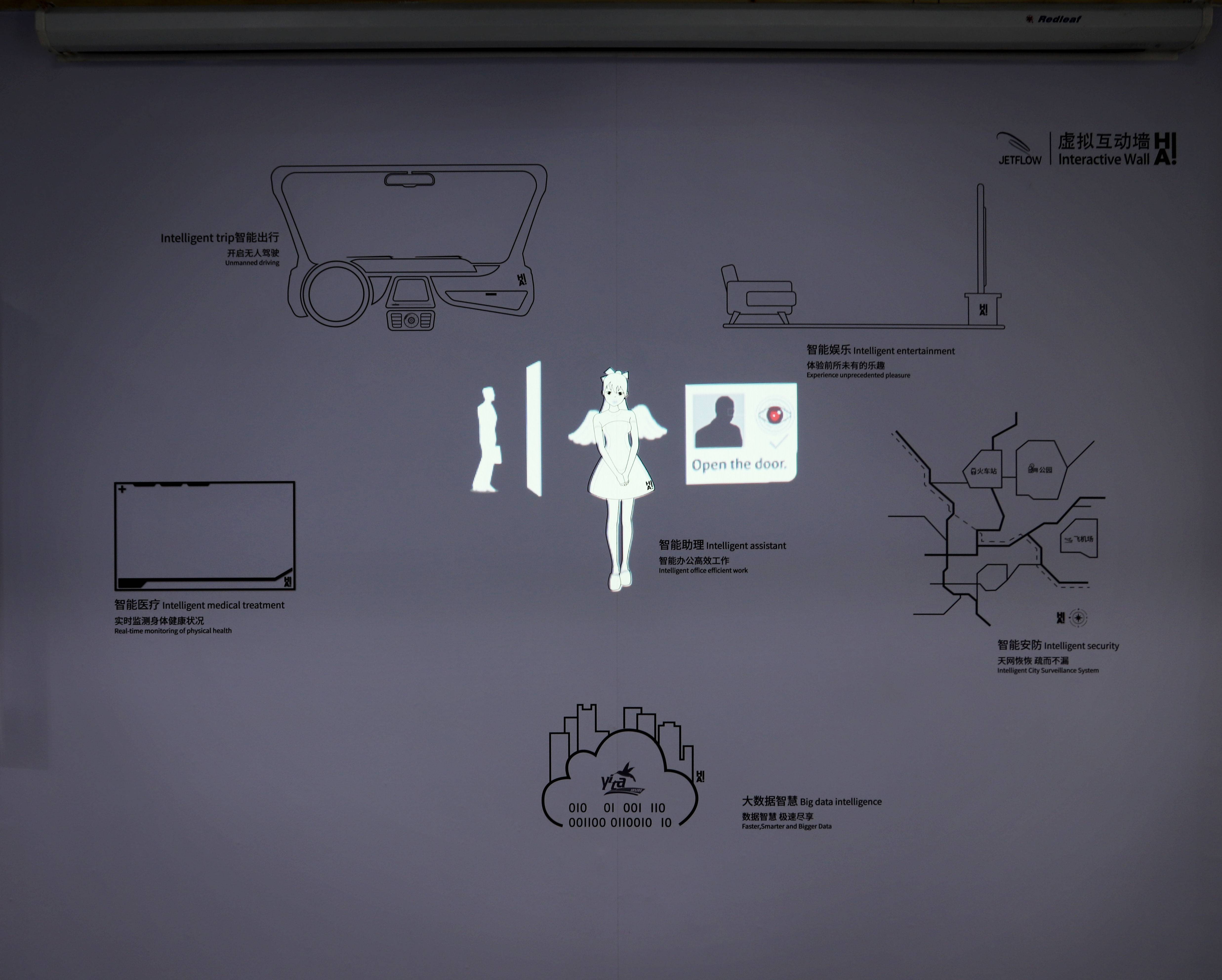
Reported video:展厅用的机械互动装置配合投影和一体机做的仿透明效果3D动画交互互动墙
Streaming issue
Progress bar not working
Loading animation issue
Black screen
Other
Description:
Send
展厅用的机械互动装置配合投影和一体机做的仿透明效果3D动画交互互动墙 Original
Interactive ExhibitionInteractive MappingInteractive ARInteractiveInteractive Installation ExhibitionCultural TourismTechnology Tourist AttractionExhibition Hall

 299
Creators


Classification of Mechanical Interactive Installations for Exhibition Halls
Mechanical interactive installations for exhibition halls can be categorized based on technical principles, interaction modes, and functional objectives, including the following types:
Technology-Driven Type: Centered on mechanical structures such as gear transmissions, linkage mechanisms, or pneumatic systems, these installations engage users through physical motion (e.g., rotating a handle to activate a dynamic sculpture). They emphasize mechanical aesthetics and engineering logic, ideal for science museums or industrial-themed exhibitions.
Digital Interactive Type: Integrated with sensors and programming (e.g., infrared sensing, pressure feedback, or motion capture), these installations enable human-machine data interaction (e.g., gesture-controlled robotic arms for painting). Commonly used in art exhibitions or tech innovation displays, they highlight immersive experiences.
Educational Functional Type: Designed for knowledge dissemination, these installations simulate natural phenomena or scientific principles through mechanical interaction (e.g., lever experiment platforms, gear transmission models). They are widely adopted in museums or educational exhibitions, balancing entertainment and pedagogy.
Artistic Expression Type: These installations convey abstract concepts or emotions through mechanical motion (e.g., light-shadow mechanisms, random-motion sculptures). They prioritize artistic and philosophical narratives, often featured in contemporary art exhibitions.
Classification criteria may combine application scenarios (technology/art/education), interaction depth (one-way operation/two-way feedback), and technical complexity (basic mechanics/smart integration), offering tailored references for exhibition design and device selection.
Photo Album






Comments
Please Log in or Register to comment