


 Publish
 Videos
 Articles
 Events
 EN
EN 1080P 1080P
 Add to Channel Download Photo Album 3 Report
Playing issue
Reported video:蛰形共生
Streaming issue
Progress bar not working
Loading animation issue
Black screen
Other
Description:
Send
蛰形共生 Original
 1925
1925Our theme starts from ocean pollution, using jellyfish as a symbol of life in the ocean, because of their beautiful appearance, just like the ocean.
However, due to human overdevelopment and indiscriminate discharge, marine debris such as plastic bags, cans, and nuclear contaminated water is rampant, causing irreversible changes in the ocean and affecting the survival of marine organisms, thereby endangering the entire biosphere. From the death of a beaked whale in the Philippines in 2019 due to ingesting up to 80 pounds of plastic waste, to now the North Pacific circulation center has formed a plastic waste accumulation area twice the size of Texas, with over 100000 marine organisms worldwide dying each year from plastic entanglement or ingestion. From marine radioactive pollution and the destruction of ecosystems due to the death of a large number of marine organisms, to the long-term impact of radioactive substances on human health and the existence of ecological risks, there has also been a crisis of trust caused by the unauthorized discharge of nuclear wastewater internationally.
We hope to remind people through this work that the ocean is not just a home for marine creatures, but also not far away from us.
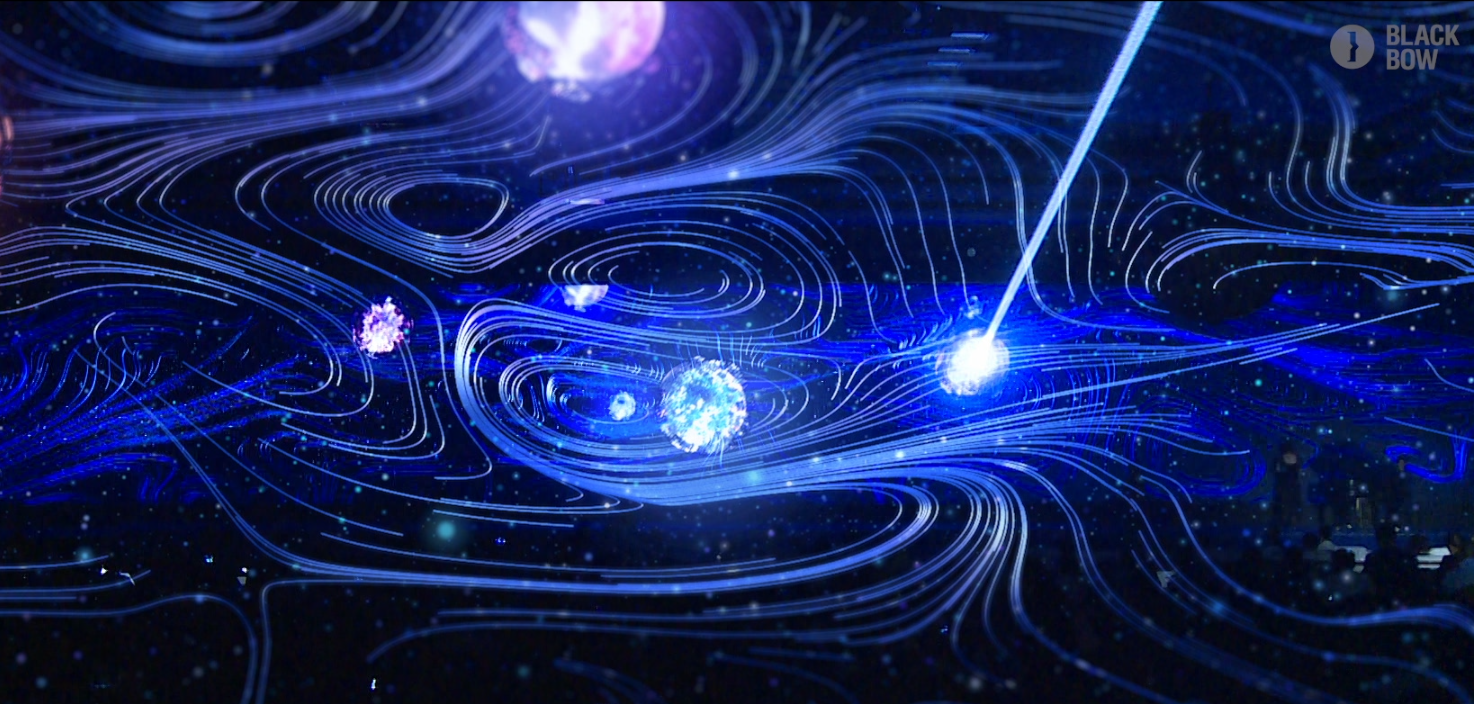
Based on the core of the course, we will focus our vision on marine ecology. The work starts with waves to reflect the theme of the ocean, and adds fault elements midway to depict the invasion of pollution on the ocean, providing a big background for the pollution of jellyfish living environment and the variation of jellyfish in the future. The repeated malfunctions in the work are a concrete manifestation of the contradictions and conflicts between pollution, nature, and humanity. Jellyfish are sensitive to water quality and have a beautiful appearance while also being fragile and fleeting. Unlike using ordinary fish schools to represent the ocean, they are more beautiful and innovative, and can arouse the audience's desire for protection. As the work plays, jellyfish are surrounded by polluted particles, indicating that natural organisms cannot escape the fate and inevitability of pollution. The 26 letters can form various sources of pollution, representing the complex and diverse pollution that nature receives. At the same time, the letters are products of humanity, symbolizing the relationship between this pollution that goes beyond the scope of natural purification and humanity. After the mutation of the jellyfish, the heartbeat gradually increases as it swims, indicating a close relationship between humans and it, echoing the ultimately revealed human phantom.
At the end of the work, the core of the jellyfish and the struggling figure are flashed in the frame, revealing the theme of coexistence between humans and nature.
However, due to human overdevelopment and indiscriminate discharge, marine debris such as plastic bags, cans, and nuclear contaminated water is rampant, causing irreversible changes in the ocean and affecting the survival of marine organisms, thereby endangering the entire biosphere. From the death of a beaked whale in the Philippines in 2019 due to ingesting up to 80 pounds of plastic waste, to now the North Pacific circulation center has formed a plastic waste accumulation area twice the size of Texas, with over 100000 marine organisms worldwide dying each year from plastic entanglement or ingestion. From marine radioactive pollution and the destruction of ecosystems due to the death of a large number of marine organisms, to the long-term impact of radioactive substances on human health and the existence of ecological risks, there has also been a crisis of trust caused by the unauthorized discharge of nuclear wastewater internationally.
We hope to remind people through this work that the ocean is not just a home for marine creatures, but also not far away from us.
Based on the core of the course, we will focus our vision on marine ecology. The work starts with waves to reflect the theme of the ocean, and adds fault elements midway to depict the invasion of pollution on the ocean, providing a big background for the pollution of jellyfish living environment and the variation of jellyfish in the future. The repeated malfunctions in the work are a concrete manifestation of the contradictions and conflicts between pollution, nature, and humanity. Jellyfish are sensitive to water quality and have a beautiful appearance while also being fragile and fleeting. Unlike using ordinary fish schools to represent the ocean, they are more beautiful and innovative, and can arouse the audience's desire for protection. As the work plays, jellyfish are surrounded by polluted particles, indicating that natural organisms cannot escape the fate and inevitability of pollution. The 26 letters can form various sources of pollution, representing the complex and diverse pollution that nature receives. At the same time, the letters are products of humanity, symbolizing the relationship between this pollution that goes beyond the scope of natural purification and humanity. After the mutation of the jellyfish, the heartbeat gradually increases as it swims, indicating a close relationship between humans and it, echoing the ultimately revealed human phantom.
At the end of the work, the core of the jellyfish and the struggling figure are flashed in the frame, revealing the theme of coexistence between humans and nature.
Photo Album





Comments
Please Log in or Register to comment