


 Publish
 Videos
 Articles
 Events
 EN
EN 1080P 1080P
 Add to Channel Download Photo Album 7 Report
Playing issue
Reported video:虚拟博物馆Virtual Museum
Streaming issue
Progress bar not working
Loading animation issue
Black screen
Other
Description:
Send
虚拟博物馆Virtual Museum Original
Interaction Technology

 2712
2712《虚拟博物馆》
队长:李文娅
成员:金桂芝,丁海明,肖会成
本游戏目的是借助“时空”为载体,以便游览不同历史时期不同朝代的具有文化特色的文物,从而达到“历史与科技相结合”的视觉游戏体验。游戏以第一人称为视角,通过对游戏人物进行交互,从而实现对玩家对文物的全方位了解,拓宽玩家的知识面。
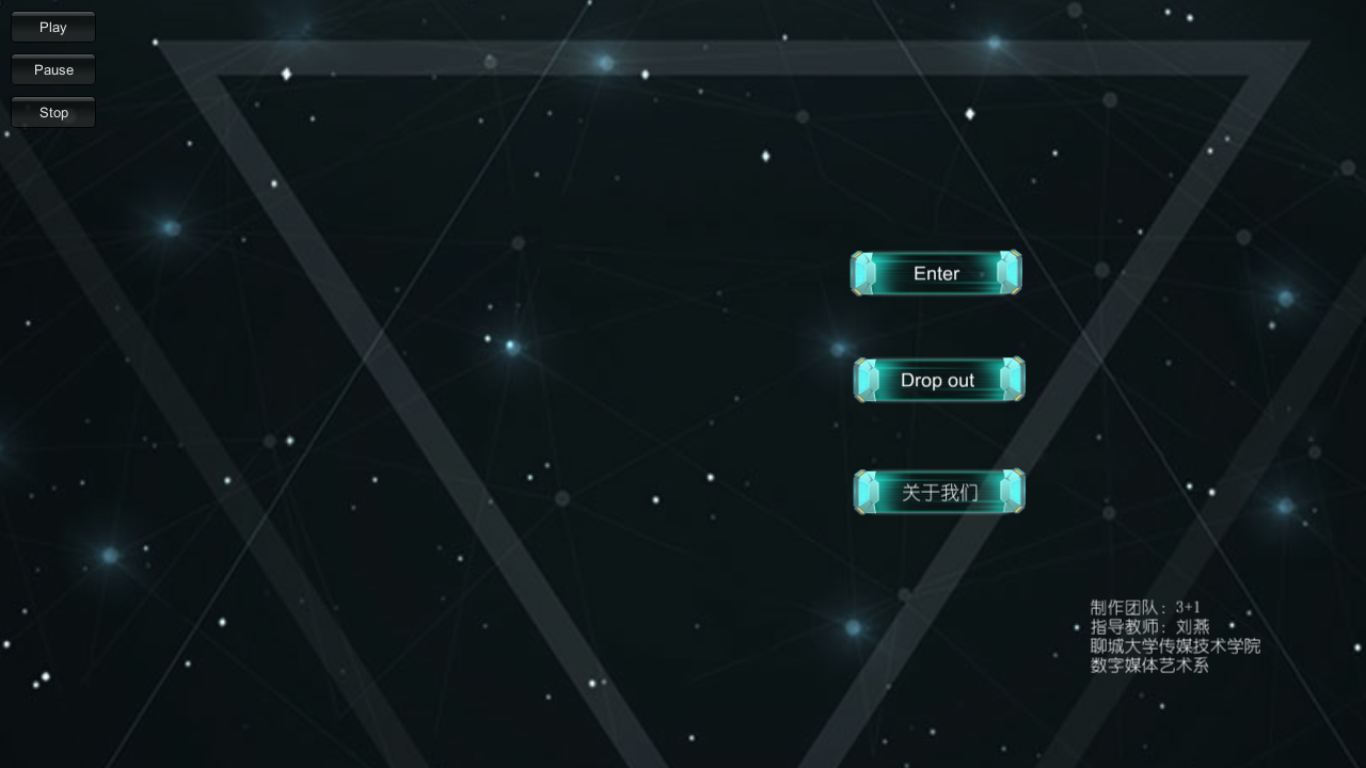
最开始为游戏介绍界面,对游戏进行整体介绍,方便玩家掌握游戏方式。进入游戏后场景中会有三个传送门,分别对应三个不同的文物场景。鼠标点击传送门会出现场景转换所对应的按钮,从而实现以传送门切换场景的目的。在场景中游览可调节左上角控制背景音乐的开关,当游览结束后,可通过“V”键返回最初的传送场景界面,进行后续的场景游览。
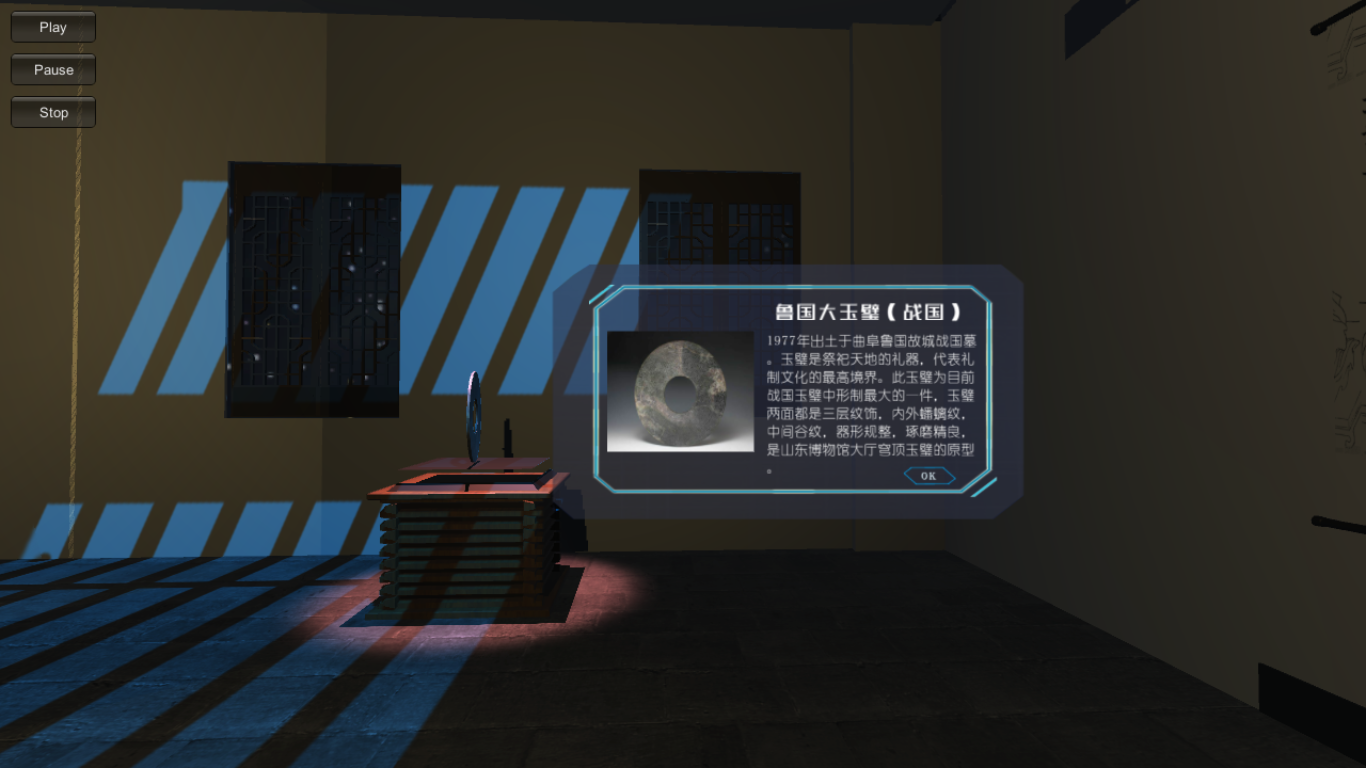
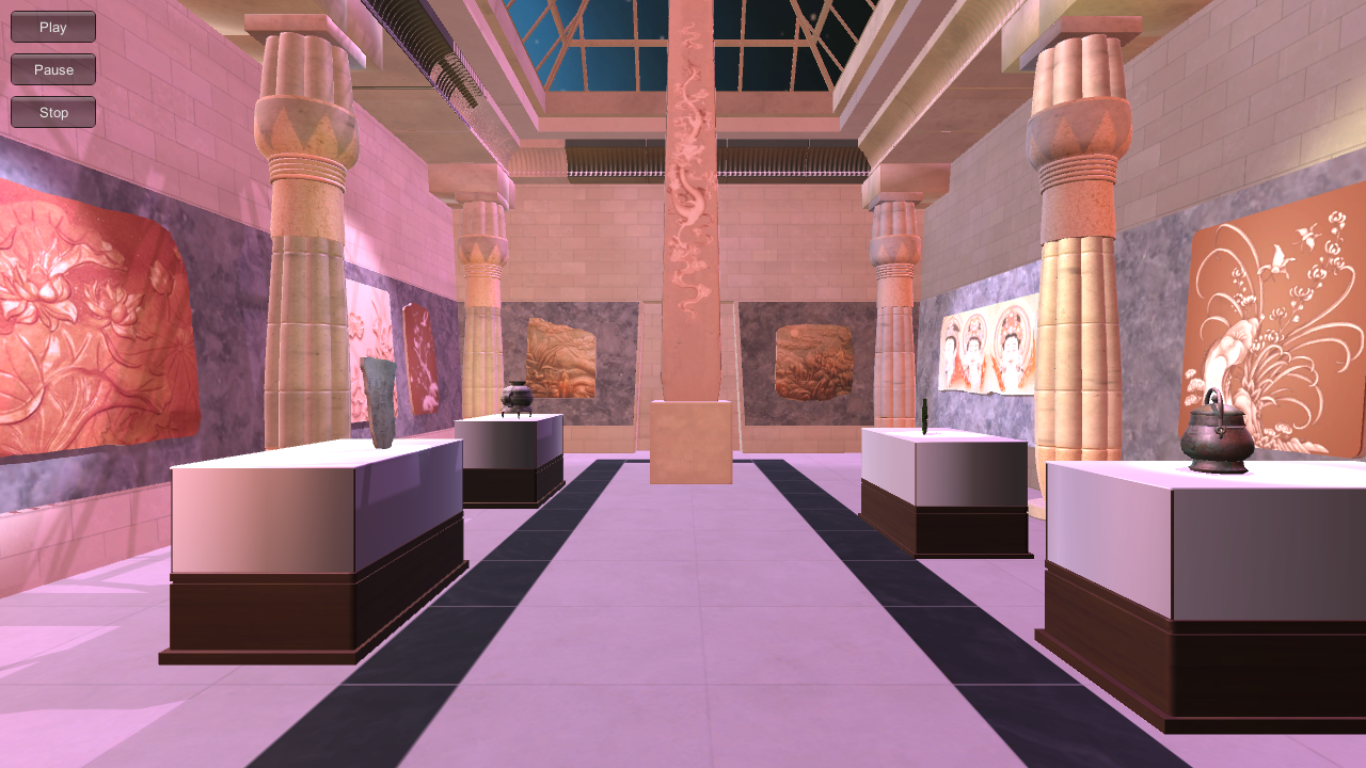
首个展览场景为“夏商周馆”,包含四件古文物以及十幅壁画,从而体现出夏商周时期文字演变和文物粗中有细的特点。
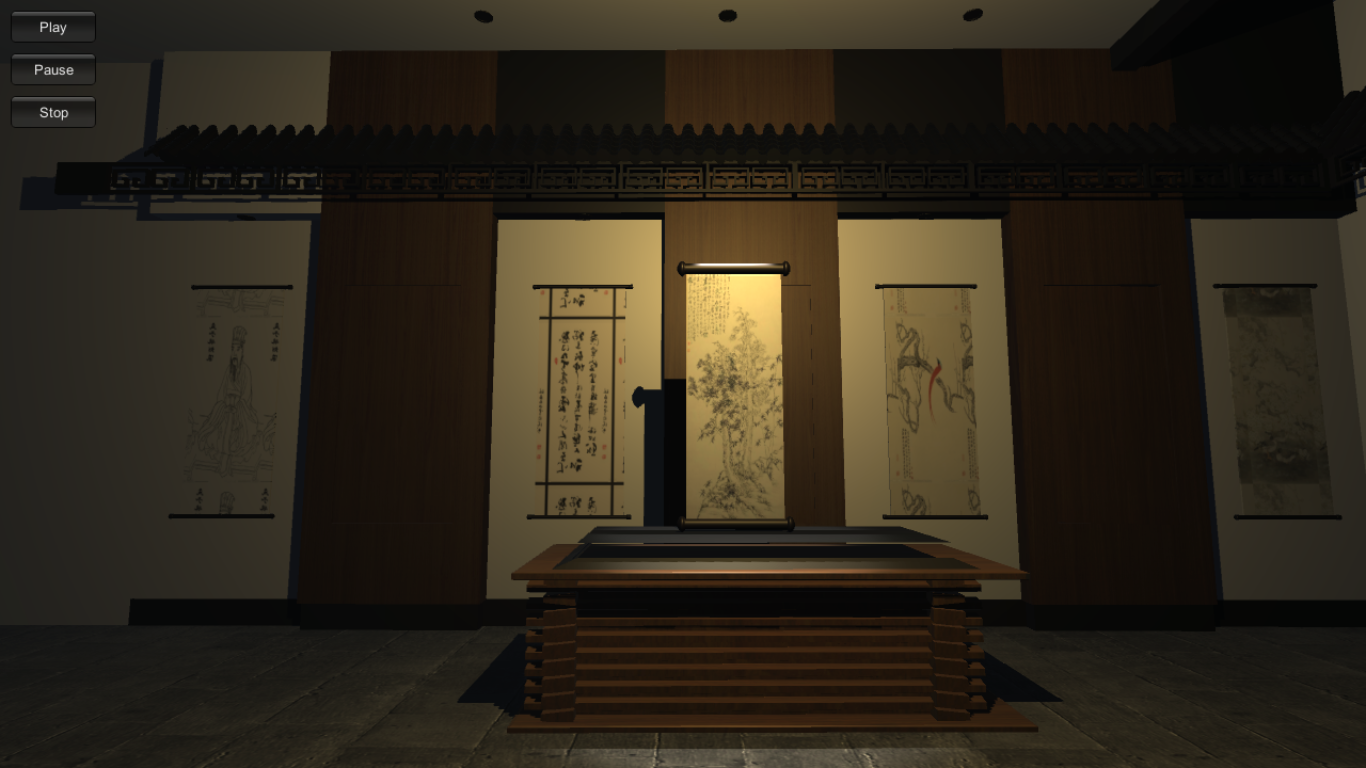
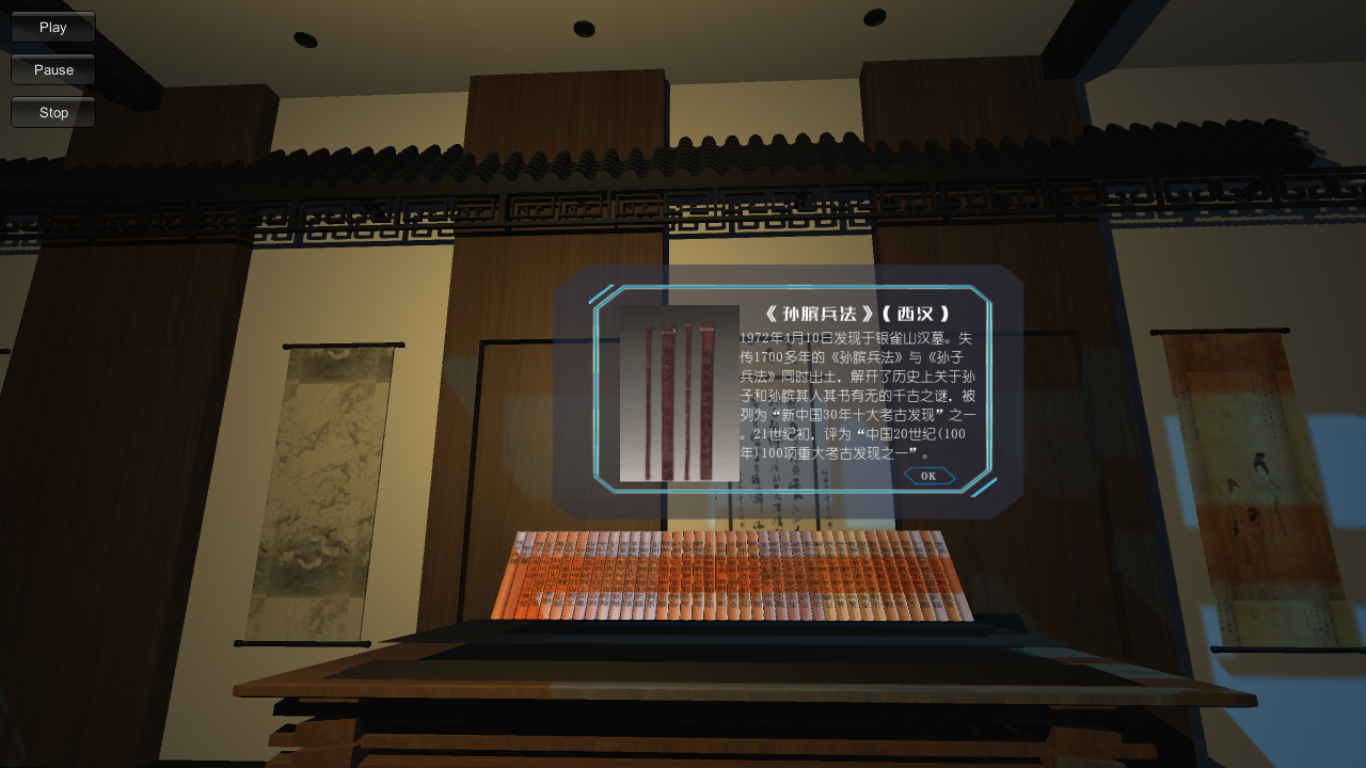
第二个场景为“书画馆”,主要展示中国历史长河中通过文字、书画、祭祀体现出来的中国文化的发展。
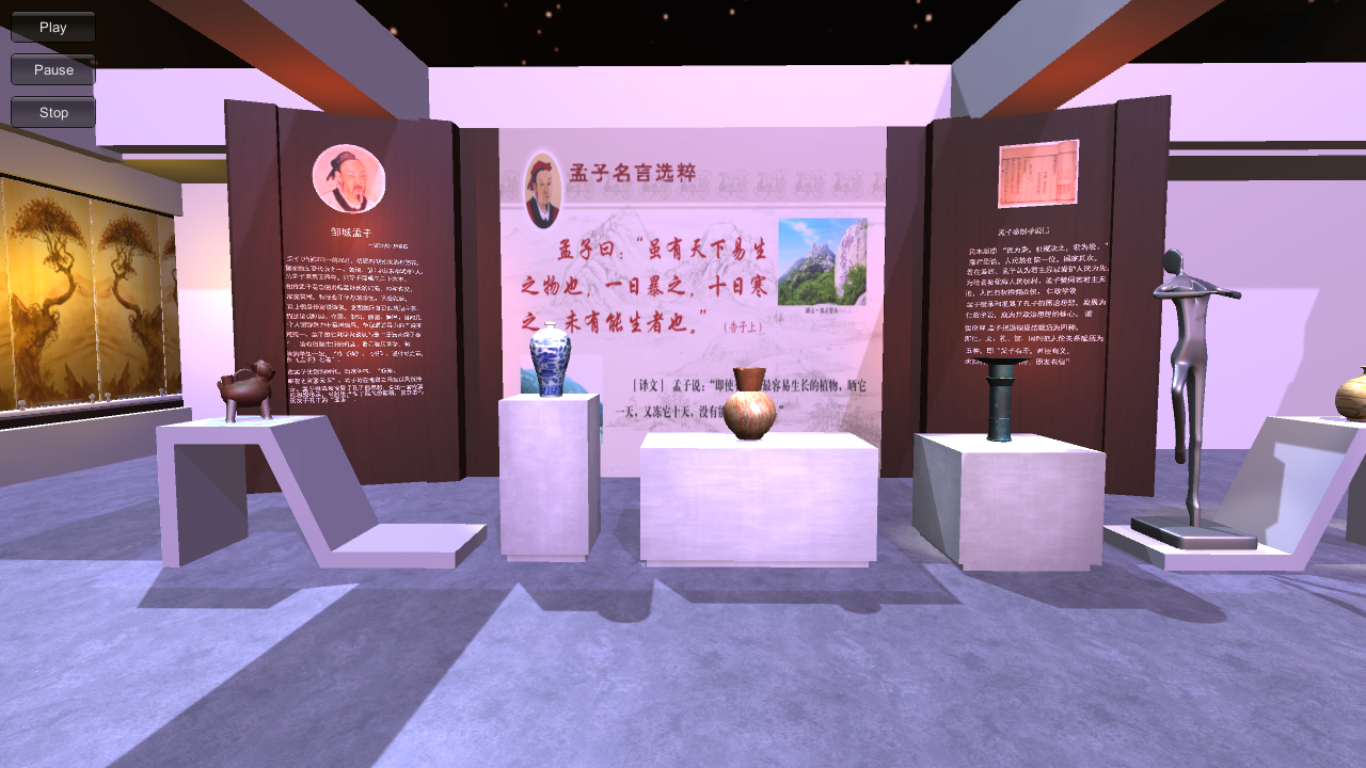
最后场景为“陶罐馆”,以各个历史时期的陶器、瓷器,展现出中华文化的源远流长,博大精深。
《 Virtual Museum》
Team leader:Li Wenya
Team member:Jin Guizhi , Ding Haiming , Xiao Huicheng
The purpose of this game is to use the "time and space tunnel" as the carrier, so as to visit the cultural relics of different dynasties in different historical periods, so as to achieve the visual game experience of "combining history and technology". The game is called perspective by the first person. Through moving and interacting with the game characters, the game realizes a comprehensive understanding of the players' cultural relics and broadens their knowledge.
At the beginning, I introduced the interface for the game and introduced the game as a whole to facilitate players to master the game mode. After entering the game, there will be three transfer doors, corresponding to three different cultural relics scenes. Mouse click the transfer door will appear the scene conversion corresponding to the button, so as to achieve the transfer of the door switch scene. In the scene, the upper left corner can be adjusted to control the switch of background music. After the end of the tour, the "V" key can be used to return to the original transmission scene interface for subsequent scene tour.
The first exhibition scene is "Xia Shang Zhou museum", which contains four ancient cultural relics and ten murals, which reflects the character evolution and extensive and detailed cultural relics in the Xia Shang and Zhou dynasties.
The second scene is the "painting and calligraphy hall", which mainly shows the development of Chinese culture reflected in the long history of China through writing, painting and sacrifice.
The final scene is "pottery pavilion", which shows the long history and extensive and profound Chinese culture with pottery and porcelain from various historical periods.
队长:李文娅
成员:金桂芝,丁海明,肖会成
本游戏目的是借助“时空”为载体,以便游览不同历史时期不同朝代的具有文化特色的文物,从而达到“历史与科技相结合”的视觉游戏体验。游戏以第一人称为视角,通过对游戏人物进行交互,从而实现对玩家对文物的全方位了解,拓宽玩家的知识面。
最开始为游戏介绍界面,对游戏进行整体介绍,方便玩家掌握游戏方式。进入游戏后场景中会有三个传送门,分别对应三个不同的文物场景。鼠标点击传送门会出现场景转换所对应的按钮,从而实现以传送门切换场景的目的。在场景中游览可调节左上角控制背景音乐的开关,当游览结束后,可通过“V”键返回最初的传送场景界面,进行后续的场景游览。
首个展览场景为“夏商周馆”,包含四件古文物以及十幅壁画,从而体现出夏商周时期文字演变和文物粗中有细的特点。
第二个场景为“书画馆”,主要展示中国历史长河中通过文字、书画、祭祀体现出来的中国文化的发展。
最后场景为“陶罐馆”,以各个历史时期的陶器、瓷器,展现出中华文化的源远流长,博大精深。
《 Virtual Museum》
Team leader:Li Wenya
Team member:Jin Guizhi , Ding Haiming , Xiao Huicheng
The purpose of this game is to use the "time and space tunnel" as the carrier, so as to visit the cultural relics of different dynasties in different historical periods, so as to achieve the visual game experience of "combining history and technology". The game is called perspective by the first person. Through moving and interacting with the game characters, the game realizes a comprehensive understanding of the players' cultural relics and broadens their knowledge.
At the beginning, I introduced the interface for the game and introduced the game as a whole to facilitate players to master the game mode. After entering the game, there will be three transfer doors, corresponding to three different cultural relics scenes. Mouse click the transfer door will appear the scene conversion corresponding to the button, so as to achieve the transfer of the door switch scene. In the scene, the upper left corner can be adjusted to control the switch of background music. After the end of the tour, the "V" key can be used to return to the original transmission scene interface for subsequent scene tour.
The first exhibition scene is "Xia Shang Zhou museum", which contains four ancient cultural relics and ten murals, which reflects the character evolution and extensive and detailed cultural relics in the Xia Shang and Zhou dynasties.
The second scene is the "painting and calligraphy hall", which mainly shows the development of Chinese culture reflected in the long history of China through writing, painting and sacrifice.
The final scene is "pottery pavilion", which shows the long history and extensive and profound Chinese culture with pottery and porcelain from various historical periods.
Photo Album


Comments
Please Log in or Register to comment