


 Publish
 Videos
 Articles
 Events
 EN
EN 1080P 1080P
 Add to Channel Download Photo Album 7 Report
Playing issue
Reported video:海海
Streaming issue
Progress bar not working
Loading animation issue
Black screen
Other
Description:
Send
海海 Original

 3216
3216Creators

"Life is as vast and turbulent as the sea"
It is a Minnan dialect phrase, roughly meaning:
Life is like the ocean—ever-changing, full of ups and downs; yet we must still live our lives well and carry on.
I. From Ancient Times to the Present, the Chinese Have Always Possessed the Courage to Venture Outward
Chinese civilization has never been one confined merely to inland lands. Deep in its cultural veins flows an innate maritime spirit.
In the remote ancient times when technology was primitive, our ancestors boarded small boats with meager supplies, bid farewell to their loved ones on the shore, and set sail toward the vast, mist-shrouded unknown ocean. They had no idea whether calm waters or raging storms lay ahead, nor how many vessels would sink forever into the deep sea and how many would luckily find islands to settle on.
It was through such repeated leapfrog voyages that they blazed one shipping route after another across the boundless ocean and opened up new homelands time and again. This is the courage etched in the nation’s very bones and blood, and the pioneering imprint that maritime civilization has endowed Chinese culture with.
Example 1
The ancient Yue people (the Baiyue ethnic groups) were widely distributed along China’s southern coasts and river basins during the pre-Qin period. Some branches migrated southward by sea, gradually spreading to the Indochina Peninsula, the Malay Archipelago and other regions, becoming the ancestors of some ethnic groups in Southeast Asia. Their migration fueled the formation of the Austronesian cultural sphere.
Imagine the ancient Yue people sailing in small boats with limited provisions, leaving their families behind to embark on a new journey. Countless boats got lost at sea, while others chanced upon islands to dock at. They built new homelands through constant island-hopping expeditions.
Example 2
The southward migration of the Hakka people refers to the process in which Han people from the Central Plains moved southward in batches to escape wars and famines, eventually settling and integrating in the border areas of Fujian, Guangdong and Jiangxi provinces.
- After the Yongjia Turmoil of the Western Jin Dynasty, aristocratic clans from the Central Plains launched the first large-scale southward migration to the Yangtze-Huaihe river basin to flee warfare.
- The Anshi Rebellion and the Huang Chao Uprising in the Tang Dynasty triggered the second wave of migration, pushing populations further south to southern Jiangxi and western Fujian.
- Between the Northern and Southern Song Dynasties, the Jurchen invasion and the Southern Song court’s retreat drove the Hakka people to the core border area of Fujian, Guangdong and Jiangxi, where the Hakka ethnic group gradually took shape.
- In the late Ming and early Qing dynasties, due to population surges and wars, the Hakka spread to central and western Guangdong, Guangxi, Sichuan, Taiwan and other places.
- In the late Qing Dynasty, affected by the Taiping Rebellion and other upheavals, some Hakka people migrated overseas to Southeast Asia and beyond.
Example 3
In earlier decades, it was common to see makeshift sheds built with straw and corn stalks on open freight coal and cargo train wagons. Later it was learned that each shed sheltered a migrant laborer.
Having heard returning villagers say they could make money in the south, they resolved to head there too. With no decent clothes to wear, they took their thickest quilt, a bag of dry flatbread, and carried bundles of corn stalks. Waiting for slow-moving night trains heading south in winter, they climbed aboard and propped up corn stalks into small windshields.
Illiterate and with no formal travel arrangements, they simply followed the train route. When they spotted the lights of a town, they would jump off to look for work. Some left in early spring and returned by year’s end; others came back every other year. Those who could afford it bought train tickets, while the rest continued their old way of traveling by sneaking onto trains.
Villagers in some parts of Fujian tried to make a living by illegal immigration. They hid in the hold of cargo ships and drifted for about a month to reach the United States. There, they were met by earlier illegal immigrants who had gone before them, who would help them find jobs.
When their families back home received news that they had made it illegally, they would set off a string of firecrackers at the gate, and everyone in the village would understand what had happened.
Yet this courage has never faded with the passage of time. Today, migrant workers striving far from home, students studying across the oceans, overseas Chinese taking root in foreign lands, innovators breaking new ground in all fields, and aerospace pioneers exploring the universe—all carry forward the ancient longing to sail toward the unknown, extending it to the vaster sea of stars and boundless firmament.
From braving the waves at sea to probing the mysteries of the cosmos, from settling on remote islands to venturing into deep space, all embody the inheritance of one enduring spirit:
to set out toward the uncharted wilderness, and with humble human resolve, measure the breadth of heaven and earth.
II. Minnan Temples and Ancestral Halls: A Tale of Time From Simplicity to Splendor
What began as no more than simple thatched huts for shelter from wind and rain, these places were the humble sanctuaries found by ancestors. With the plainest plants and timber, they upheld the lineage of clans and kept alive the flame of faith.
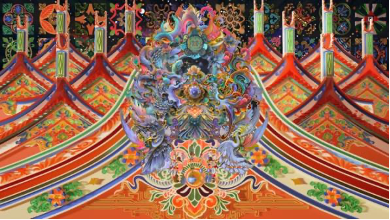
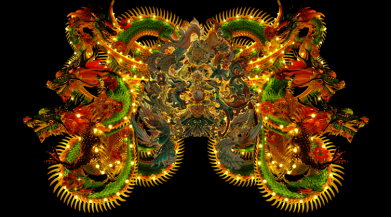
Generation after generation, descendants wandered far and wide and returned home. Bearing deep affection for their native land and reverence for their forefathers, they restored the buildings brick by brick and carved details stroke by stroke. They wove into the exquisite upturned eaves and intricate ornaments their longing for wandering days, their fortitude forged through struggles, and their perseverance in carrying on ancestral heritage.
Gradually, the crude thatched sheds shed their plain exterior, evolving into the resplendent, richly painted and elaborately carved temples and halls we see today.
III. Mazu Culture and Cross-Strait Bonds
Mazu culture serves as a vital spiritual bond that unites compatriots across the Taiwan Strait, holding irreplaceable significance for cross-strait cultural identity and folk exchanges.
For people on both sides of the strait, Mazu is not only a sea goddess guarding voyagers, but also a spiritual sustenance for homesickness. Just as elders back home whisper blessings of peace and smooth journeysto their departing children amid the sea breeze, the prayers of Taiwanese worshippers are identical to those of coastal folks in Fujian, Guangdong and beyond: may seafarers return safely, and may those living far away enjoy good fortune and well-being.
Believers across the strait pay homage to the same Mazu and pray for the same blessing of peace. This longing spanning the Taiwan Strait tightens the bond of shared ancestral roots. Meanwhile, Mazu’s spirit of upholding virtue, doing good deeds, and embracing universal love embodies the warmth and integrity typical of local people. No matter how far apart they are, compatriots on both sides recognize one another as kin through this shared cultural heritage.
IV. Know Where We Are Going Tomorrow, Never Forget Where We Came From
Those who once sailed far away relied on Mazu’s blessing to brave storms and rough seas. Today, later generations burn incense and pay homage to her—not only to cherish the memory of ancestors who ventured across the waves, but also to follow in their footsteps and pass down the wish for peace and safety from generation to generation.
Elders pray before the statue of Mazu, hoping that their younger kin who leave home to strive abroad may weather fewer hardships and meet with more smooth fortune. Embodied in Mazu culture is both the longing for those who wander far and for departed ancestors, as well as sincere blessings bestowed upon the younger generations.
V. The Inner Strength to Set Out Again Undaunted by Hardships
From ancient times to the present, women have sustained the very foundation of humanity through the innate gift of giving life. More than that, with their unique resilience, wisdom and sense of responsibility, they have left indelible marks at every stage of civilization’s evolution.
They are guardians of the family, inheritors of culture, and courageous upstanders who step forward in times of clan peril. This strength transcends social status and geography. It is the gentlest yet most powerful undercurrent etched deep in the bloodline of every nation.
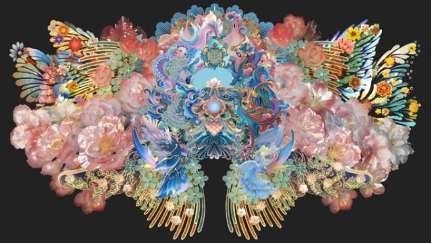
The Inspiration Behind "Hai Hai" (The Hai Hai)
After the pandemic, many of us felt trapped, weary, and adrift—spiritually soft, unmoored, and lacking strength.
So I wove this story as a comfort, a gentle solace.
May we all reclaim our long-held aspirations, and ride the winds and break the waves once more.
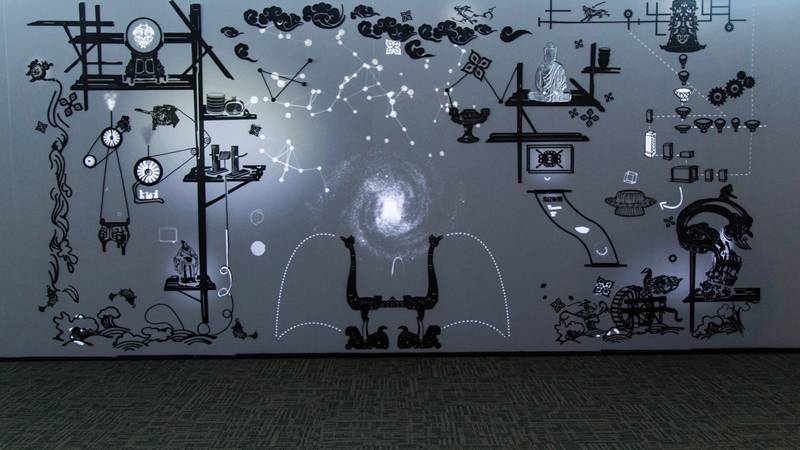
Installation Basic Parameters
Presentation Form: Human interactive light and shadow installation
Dimensions: Height 3m × Width 5m × Thickness 30cm
Installation Method: Wall-mounted suspension
Photo Album


Recommended
Autoplay
 00:56
00:56 给古老的皮影,做了个新玩法 | VibeCoding
AIInteractive ARInteractiveInteractive VideoInteractive Installation
touch designer缝合时间的裂缝
Virtuality and RealityInteractive ExhibitionInteractiveInteractive Installation



Comments
Please Log in or Register to comment