


 Publish
 Videos
 Articles
 Events
 EN
 1080P 1080P
Add to Channel Download Photo Album 4 Report
Playing issue
Reported video:The climbing
Streaming issue
Progress bar not working
Loading animation issue
Black screen
Other
Description:
Send
The climbing Original

 313
Creators

In exploring the concept of light, I’m inspired by Plato’s idea that "light makes the intangible thinkable." When I look at the Chinese symbol for light, 光 (guāng), I notice that fire is placed above man, which makes me think of consciousness embedded in the symbol. Going deeper into this idea, light can be seen as a form of awareness, allowing us to imagine things we’ve never actually seen.
In the symbol for illumination (guāng liàng), I picture a complex and harmonious web of light, connecting ideas across the universe, like a unique fingerprint within each of us, existing in the abstract world where the mind operates.
Light is like the flow of knowledge, helping us understand the biggest questions in life—like the beginning of time, the creation of humanity, and the space we live in. Just as light and shadow, or yin and yang, are inseparable, we can't have one without the other. This idea of opposites helps us imagine the unseen and think about things like the finite and infinite, life and death, space and emptiness.
Looking at the mountain, which is reflected in the shape of our canvas, I see it as a symbol of the highest point of enlightenment, where knowledge reaches its peak. From here, you can see the widest view, watching how light moves across and touches the horizon.
Using the mountain’s form, we create a metaphor where light is the force connecting all beings, reminding us that we’re part of something much bigger and deeper. Light is the universal language—the whisper that keeps the universe in balance, guiding the cosmic dance of life.
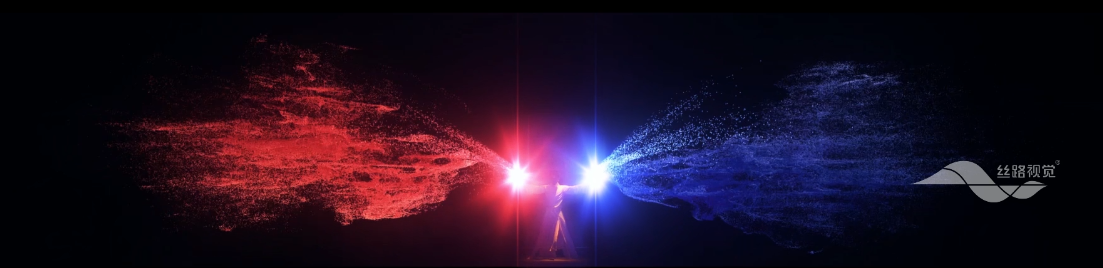
The story begins with a spark, like a neuron lighting up, as we gain knowledge, which is the essence of existence—just like when, in the dark, the divine egg split in two, and light gave shape to the sky, while the bottom half formed the earth.
Photo Album





Comments
Please Log in or Register to comment