


 Publish
 Videos
 Articles
 Events
 EN
EN 1080P 1080P
 Add to Channel Download Photo Album 4 Report
Playing issue
Reported video:第一人称单数
Streaming issue
Progress bar not working
Loading animation issue
Black screen
Other
Description:
Send
第一人称单数 Original

 164
164Creators




"The Scream" was created by Norwegian painter Edvard Munch in 1893
The inspiration for the painting was that one evening, Munch and two friends walked along the seaside sidewalk. On one side of the road is the city, on the other side is the fjord. The author, tired and sick, stopped and looked over the fjord. At sunset, the clouds were dyed red like blood. Munch was perched on the railing, too tired to speak. As his friends walked on, he fell behind, and he felt a piercing scream pass through the heavens and the earth, and the author could hear it. Munch stopped there, trembling with unease. Such horror and despair finally erupted into a cry of lonely and terrible life.
Act I: The Garden
Colorful Q held the colorful umbrella, bouncing on the road in the park, with a "wanton" smile on her face, suddenly she stopped her steps, looked back suddenly, and found a field of flowers, she immediately put down the umbrella, approached the field of flowers with small steps, leaned down, leaned over to the flower field, closed her eyes and enjoyed the fragrance of flowers, without letting out a "wow" exclamation. Just as she was about to pluck one of them, she was stung by the thorns, frowned, and took a few steps back. After blowing her fingers, she walked again to the edge of the little flower field, looked carefully at each flower, and then carefully plucked a thornless flower, put it on the end of her hair, and shyly took up her umbrella and walked in the direction of her home.
(ps: Black Q in Act 1 has been hiding in the corner and has not appeared)
Act II: On the Road
Color Q put away the umbrella and walked on the way home, the closer Color Q walked home, the lower her performance, the heavier her steps, and the hammer head appeared, Black Q came out of the corner, followed Color Q with her head down and walked silently, one - began to be a long distance away from Color Q, far away, The more you walked home, the closer Black Q got to Color Q. (The sky is getting late, the sunset is afterglow, the street lights are on, the shadow of the color Q is elongated, and the black Q is like a shadow, getting closer and closer to the color Q)
Act III: At home
(In the dim light) color Q stood at the door of the house, put his hand on the doorknob, hesitated for a long time, did not push the door open, color Q took a step back, black Q walked in front of color Q, opened the door and walked into the house, color Q slowly swallowed and followed into the door, slumped on the sofa, turned on the TV with an indifferent expression, black Q picked up the family photo frame, slowly approached to look at the photo frame, gently wiped the person on the photo frame, showing a sad expression and wanted to cry.
Act IV: On the Bridge
Color Q walked on the bridge with a bag on his back, black Q followed Color Q from afar, suddenly heard a loud noise, Q stopped, looked into the distance, noticed that the sky was unconsciously shrouded in blood red, Color Q looked out of sight, black Q stood on the side of Color Q, and Color Q looked into the distance side by side (in Q's vision, the red part was gradually amplified, and the ears were filled with a harsh sound like the collapse of nature) Color Q looked at the red intently.
Black Q turned around with a frightened expression.
Serve the way
On stage, make sure each character can through costumes and makeup
It is clear enough to express its character traits and conform to the development of the plot. In the beginning, by carefully studying the script, you can understand the background of each character, the emotional direction, and the relationship with the other characters. The design idea revolves around the visual exaggeration of pantomime, which relies on body language and visual communication, so the color contrast and styling design of the costumes are emphasized to enhance the dramatic performance of the characters. For example, bright costumes were designed for the main characters so that they were instantly recognizable on stage, while for the supporting characters, a darker but still distinctive outfit was chosen to maintain the overall harmony and balance.
Multimedia production
1. Before we start creating, we decide on a theme and goals. This helps us maintain focus throughout the creative process, ensuring consistency and coherence throughout the work.
2. In order to create high-quality multimedia works, it is necessary to conduct in-depth research on the chosen topic and collect materials such as pictures, paintings, and stories related to the painter Munch. These materials provide inspiration and support for our ideas.
3. In the design and planning stage, we design a complete multimedia work plan based on the materials collected and the suggestions given by the teacher. This includes identifying elements such as the structure, layout, style, etc., of the work, and how these elements fit together to form a compelling story.
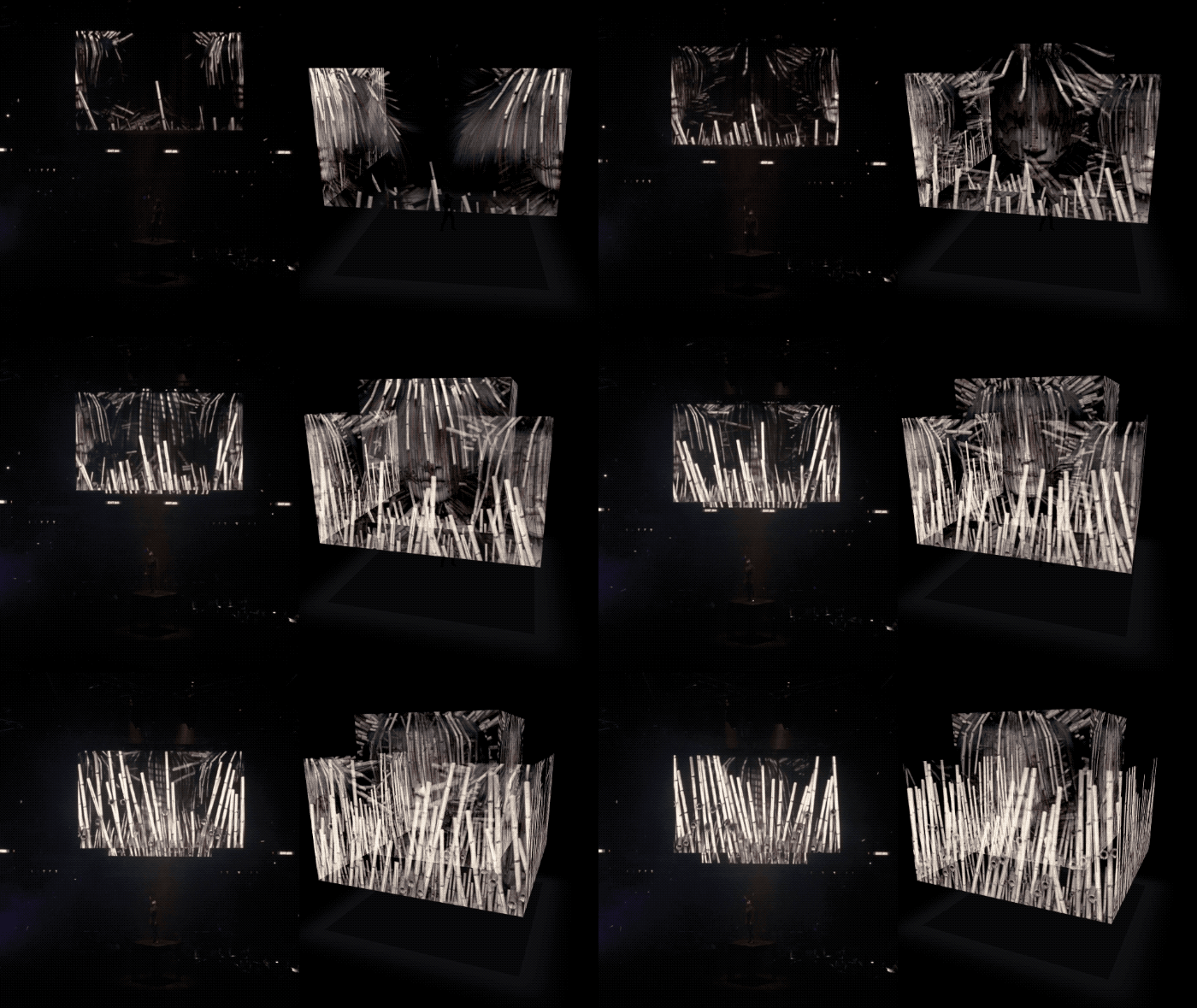
4. Use multimedia production tools, such as Jianying, PS, and with the help of the teacher, use AI to generate paintings of similar style, and edit, composit, adjust and other processes of the collected materials to make them conform to our design plan.
5. After completing the initial production, we test and evaluate the work under the advice of the teacher to ensure that its quality and effect meet expectations. In addition, by showing the works to other team members, we collect their opinions and suggestions in order to further optimize and improve the works.
The inspiration for the painting was that one evening, Munch and two friends walked along the seaside sidewalk. On one side of the road is the city, on the other side is the fjord. The author, tired and sick, stopped and looked over the fjord. At sunset, the clouds were dyed red like blood. Munch was perched on the railing, too tired to speak. As his friends walked on, he fell behind, and he felt a piercing scream pass through the heavens and the earth, and the author could hear it. Munch stopped there, trembling with unease. Such horror and despair finally erupted into a cry of lonely and terrible life.
Act I: The Garden
Colorful Q held the colorful umbrella, bouncing on the road in the park, with a "wanton" smile on her face, suddenly she stopped her steps, looked back suddenly, and found a field of flowers, she immediately put down the umbrella, approached the field of flowers with small steps, leaned down, leaned over to the flower field, closed her eyes and enjoyed the fragrance of flowers, without letting out a "wow" exclamation. Just as she was about to pluck one of them, she was stung by the thorns, frowned, and took a few steps back. After blowing her fingers, she walked again to the edge of the little flower field, looked carefully at each flower, and then carefully plucked a thornless flower, put it on the end of her hair, and shyly took up her umbrella and walked in the direction of her home.
(ps: Black Q in Act 1 has been hiding in the corner and has not appeared)
Act II: On the Road
Color Q put away the umbrella and walked on the way home, the closer Color Q walked home, the lower her performance, the heavier her steps, and the hammer head appeared, Black Q came out of the corner, followed Color Q with her head down and walked silently, one - began to be a long distance away from Color Q, far away, The more you walked home, the closer Black Q got to Color Q. (The sky is getting late, the sunset is afterglow, the street lights are on, the shadow of the color Q is elongated, and the black Q is like a shadow, getting closer and closer to the color Q)
Act III: At home
(In the dim light) color Q stood at the door of the house, put his hand on the doorknob, hesitated for a long time, did not push the door open, color Q took a step back, black Q walked in front of color Q, opened the door and walked into the house, color Q slowly swallowed and followed into the door, slumped on the sofa, turned on the TV with an indifferent expression, black Q picked up the family photo frame, slowly approached to look at the photo frame, gently wiped the person on the photo frame, showing a sad expression and wanted to cry.
Act IV: On the Bridge
Color Q walked on the bridge with a bag on his back, black Q followed Color Q from afar, suddenly heard a loud noise, Q stopped, looked into the distance, noticed that the sky was unconsciously shrouded in blood red, Color Q looked out of sight, black Q stood on the side of Color Q, and Color Q looked into the distance side by side (in Q's vision, the red part was gradually amplified, and the ears were filled with a harsh sound like the collapse of nature) Color Q looked at the red intently.
Black Q turned around with a frightened expression.
Serve the way
On stage, make sure each character can through costumes and makeup
It is clear enough to express its character traits and conform to the development of the plot. In the beginning, by carefully studying the script, you can understand the background of each character, the emotional direction, and the relationship with the other characters. The design idea revolves around the visual exaggeration of pantomime, which relies on body language and visual communication, so the color contrast and styling design of the costumes are emphasized to enhance the dramatic performance of the characters. For example, bright costumes were designed for the main characters so that they were instantly recognizable on stage, while for the supporting characters, a darker but still distinctive outfit was chosen to maintain the overall harmony and balance.
Multimedia production
1. Before we start creating, we decide on a theme and goals. This helps us maintain focus throughout the creative process, ensuring consistency and coherence throughout the work.
2. In order to create high-quality multimedia works, it is necessary to conduct in-depth research on the chosen topic and collect materials such as pictures, paintings, and stories related to the painter Munch. These materials provide inspiration and support for our ideas.
3. In the design and planning stage, we design a complete multimedia work plan based on the materials collected and the suggestions given by the teacher. This includes identifying elements such as the structure, layout, style, etc., of the work, and how these elements fit together to form a compelling story.
4. Use multimedia production tools, such as Jianying, PS, and with the help of the teacher, use AI to generate paintings of similar style, and edit, composit, adjust and other processes of the collected materials to make them conform to our design plan.
5. After completing the initial production, we test and evaluate the work under the advice of the teacher to ensure that its quality and effect meet expectations. In addition, by showing the works to other team members, we collect their opinions and suggestions in order to further optimize and improve the works.
Photo Album




Comments
Please Log in or Register to comment