


- Report
Today, 21 November 2026, the Museum of Australian Photography in Wheelers Hill opens The World Came Flooding In, a free exhibition by Melbourne-based artists Isobel Knowles and Van Sowerwine. Through 14 February 2027, visitors can walk through a half-hour virtual-reality reconstruction of three flood-affected homes, built from cardboard miniatures and the voices of the people who lived there.
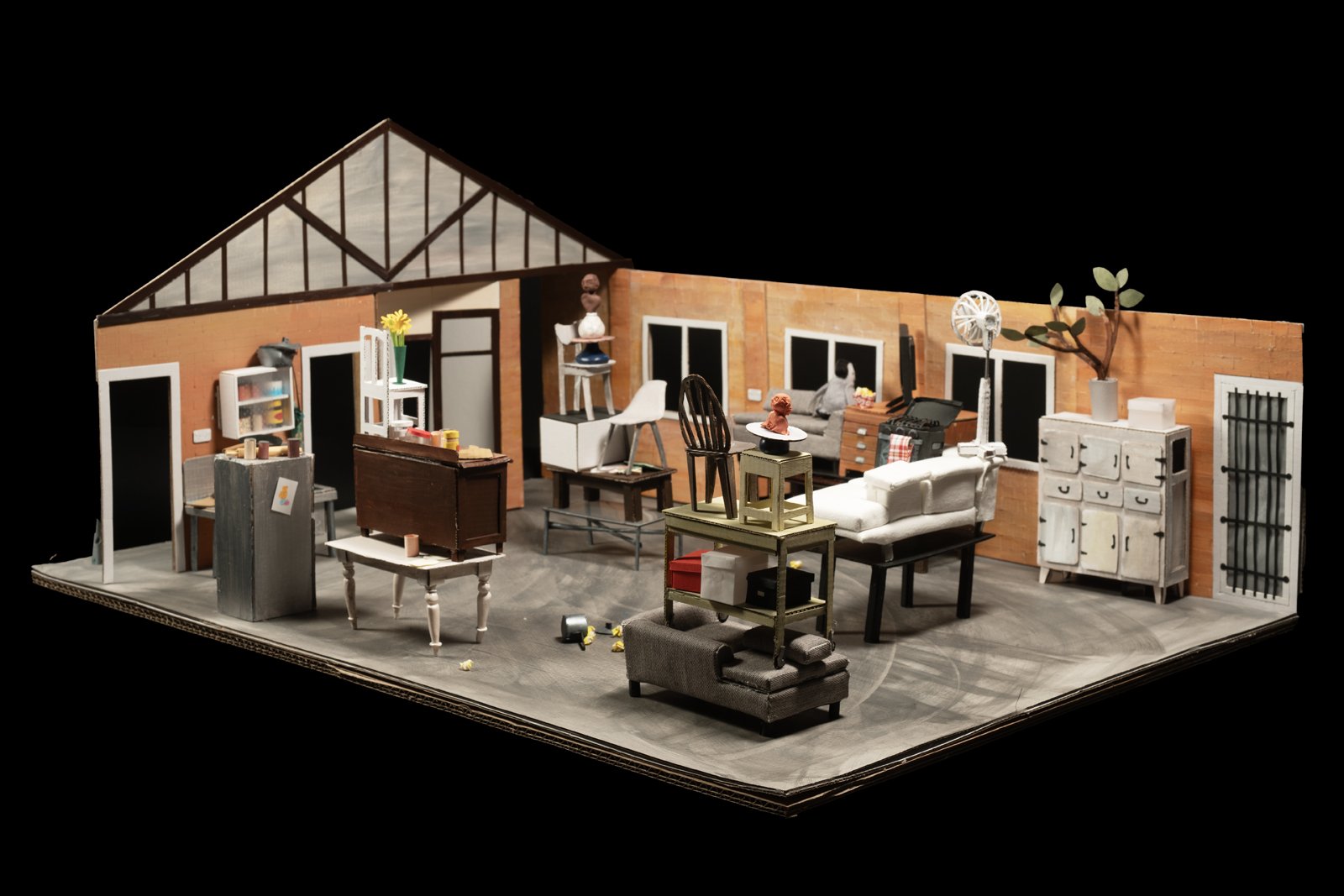
Isobel Knowles and Van Sowerwine, a miniature house built for The World Came Flooding In. Official work photograph published on the artists’ project page. The picture shows the physical scale model, not a screenshot of the virtual-reality walk-through and not an installation view of the 2026 MAPh galleries. Courtesy of the artists and Film Camp, as credited in museum-related listings.
A preview published by Photo Review ahead of the opening describes how the project began: community creative workshops in Lismore, where flood-affected people were invited to remember things they had lost, through simple paper craft and photography. From that starting point the artists interviewed three Australians — named in the preview as Marina, Antoinette and Tom — who spoke about living through climate disaster. Capture magazine, listing the MAPh season, calls the finished exhibition “an immersive and sensitive portrayal of life before, during, and after natural disaster,” combining virtual reality, projections, detailed miniatures, photographs and sound. Both that listing and Photo Review name MAPh director Anouska Phizacklea as curator, and place the show alongside Diana Markosian’s Father in the same dates.
The official launch is this afternoon at 13:00, with an opening address by the two artists. Entry is free. The venue is the Museum of Australian Photography, 860 Ferntree Gully Road, Wheelers Hill, Victoria.
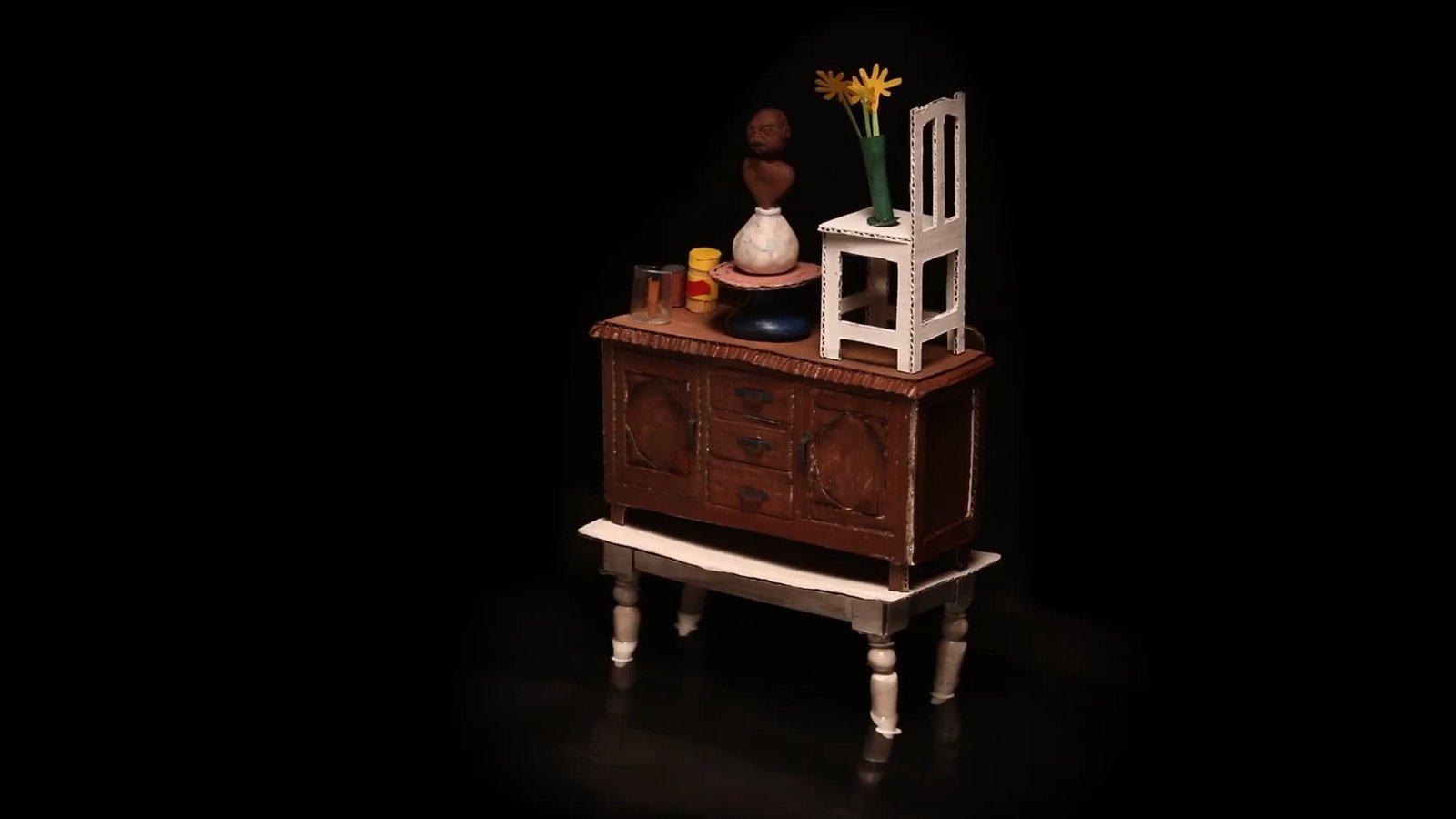
A detail of a handmade miniature cabinet, with a bust, flowers and a small chair on top, published as a hero image on the artists’ project page for The World Came Flooding In. Official work photograph of the physical model, not a view of the VR experience or of the 2026 museum hang.
Photo Review sets out the method in some detail. From cardboard and other simple materials, the artists recreated each storyteller’s flooded home in miniature. Using photogrammetry, those models were then scaled to life-size in virtual reality. In the resulting 30-minute experience, visitors physically move through digital scans of the miniature rooms, guided by the voice of the person who lived there. The artists’ own site publishes close photographs of the models — a cabinet door ajar on a tiny portrait, a room of furniture frozen as if mid-day — which make the handmade origin of the digital space visible before anyone puts on a headset.
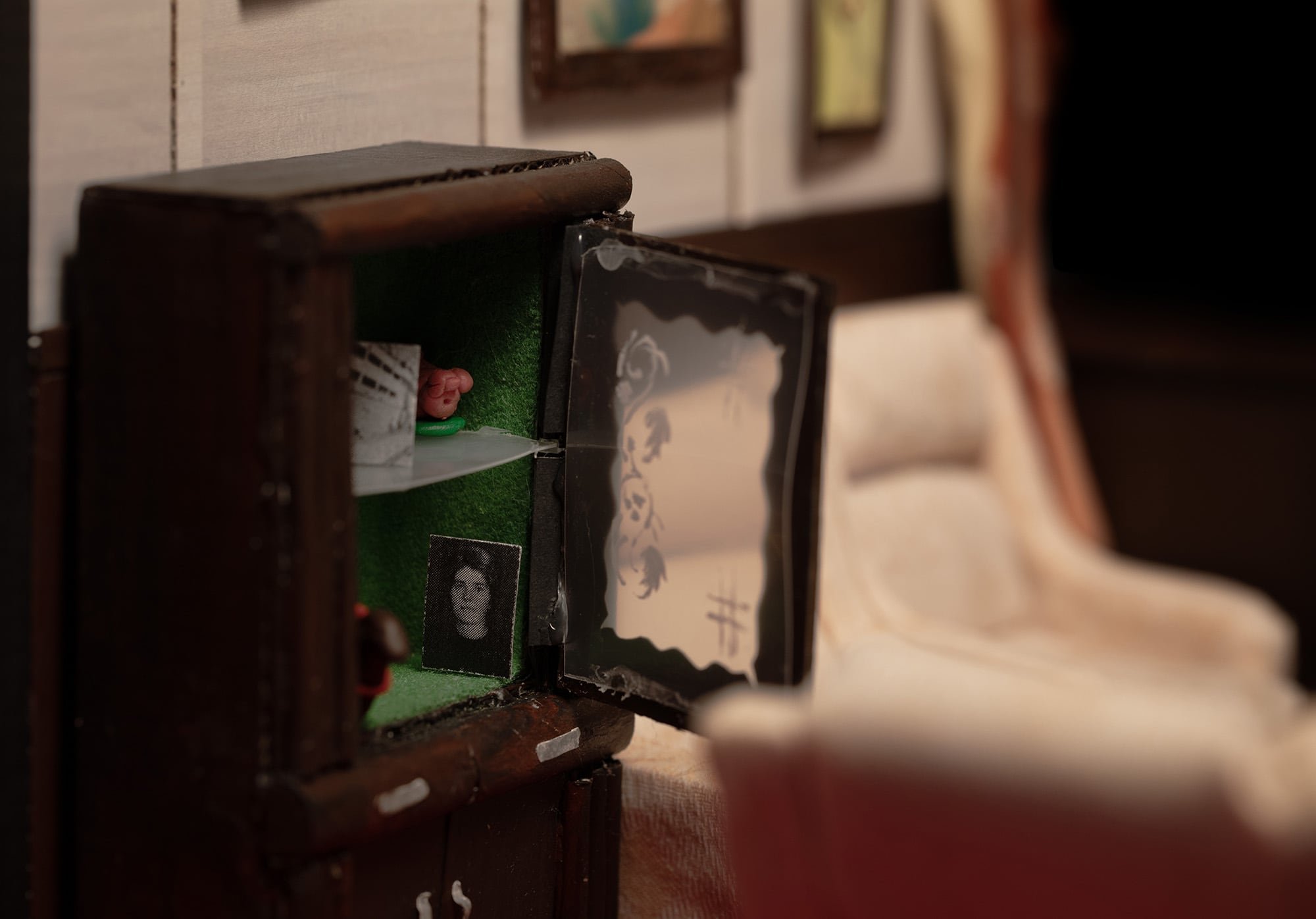
A close photograph, filed on the artists’ site under a Marina still, of a miniature cabinet with its door open on a tiny portrait. Official work image published on the project page; it documents the handmade model, not the 2026 MAPh installation and not a VR screenshot.
What the available official and press pages do not yet supply is a walk-through of how the headsets, projections and miniatures are arranged in the MAPh rooms today. This article therefore treats the physical models, and the published description of the VR method, as the verified evidence, and does not describe a gallery layout that has not been documented in the sources reviewed.
A great deal of disaster VR promises immersion by asking you to stand in someone else’s catastrophe. This project starts one step further back, in paper and cardboard, and only then lets the headset enlarge a thing you could have held. The idea worth borrowing is not a more spectacular flood, but a slower ethics of scale: first the handmade room, then the walk, and a voice that belongs to a named person rather than to an anonymous climate.
All photographs used here are official work images of the handmade miniatures, published on the artists’ project page or in pre-opening press; they are not VR screenshots and not documented views of the 2026 MAPh hang. Courtesy attributions follow museum-related listings (artists and Film Camp) where given. Images are official press or event images. MANA publication rights have not been cleared. The author has not visited the exhibition.
今天,2026年11月21日,惠勒斯希尔的澳大利亚摄影博物馆(Museum of Australian Photography,MAPh)开幕墨尔本艺术家伊索贝尔·诺尔斯(Isobel Knowles)与范·索维尔温(Van Sowerwine)的《The World Came Flooding In》(《世界涌进来了》)。展览免费开放至2027年2月14日。参观者将走进一段约30分钟的虚拟现实:三座曾被洪水淹没的房屋被从纸板微缩模型重建出来,并由曾在其中生活的人亲口引领。
伊索贝尔·诺尔斯与范·索维尔温为《The World Came Flooding In》制作的房屋微缩模型。刊于艺术家项目页的官方作品照片。照片呈现的是实体比例模型,并非虚拟现实漫游的截图,也不是2026年MAPh展厅现场。博物馆相关信息把图片归于艺术家与 Film Camp。
开幕前,《Photo Review》的预告写明了项目的起点:在利斯莫尔(Lismore)举办的社区创作工作坊里,受洪水影响的人被邀请用简单的纸工和摄影,去记起他们失去的东西。由此出发,两位艺术家采访了三位澳大利亚人——预告中写出了他们的名字:玛丽娜(Marina)、安托瓦内特(Antoinette)和汤姆(Tom)——请他们讲述在气候灾难中生活的经历。《Capture》杂志在MAPh档期介绍里,把完成的展览写成“对自然灾害之前、之中与之后的生活一次沉浸而克制的描绘”,结合虚拟现实、投影、细致的微缩模型、照片和声音。这两处与《Photo Review》都把MAPh馆长阿努斯卡·菲扎克利(Anouska Phizacklea)列为策展人,并把本展与戴安娜·马科西安(Diana Markosian)的《Father》放在同一档期。
正式开幕定在今天下午13:00,由两位艺术家致开幕辞。展览免费。地点是维多利亚州惠勒斯希尔 Ferntree Gully Road 860号的澳大利亚摄影博物馆。
一件手工微缩柜子的局部:顶上有胸像、花和一把小椅子。作为主视觉刊于艺术家项目页。这是实体模型的官方作品照片,并非VR体验画面,也不是2026年博物馆展陈现场。
《Photo Review》把方法写得比较清楚。艺术家用纸板和其他简单材料,把每位讲述者被淹过的家做成微缩模型,再借助摄影测量,把这些模型放大到虚拟现实里的等身尺度。在这段约30分钟的体验中,参观者会在微缩房间的数字扫描里实际走动,并由曾住在那里的人的声音引领。艺术家自己的网站还发布了模型的近景——一扇微开的柜门里有一张小小的肖像,一间家具停在白日里的房间——让人在戴上头显之前,先看见数字空间的手工来处。
艺术家网站上归于 Marina 的一张近景:微缩柜子开门,里面是一张小小的肖像。刊于项目页的官方作品图像,记录的是手工模型,并非2026年MAPh现场,也不是VR截图。
目前可以核对的官方与媒体页面,还没有提供头显、投影和微缩模型在今天MAPh展厅里如何布置的现场说明。因此本文只把实体模型,以及已公布的VR方法,当作经过核实的依据,而不去描写尚未被这些来源记录的展场布局。
许多灾难主题的VR,靠让你站进别人的灾难来承诺沉浸。这个项目先退了一步,从纸和纸板开始,然后才让头显去放大一件你本来可以拿在手里的东西。值得借用的不是更壮观的洪水,而是一种更慢的尺度伦理:先有手工做成的房间,再有行走,以及属于一个被写出名字的人的声音,而不是属于匿名气候的声音。
本文使用的照片均为刊于艺术家项目页或开幕前报道的官方作品图像,拍摄的是手工微缩模型,并非VR截图,也不是2026年MAPh展陈现场。致谢方式在有博物馆相关信息时,依其标注归给艺术家与 Film Camp。文中图片为官方新闻或活动图像,MANA 的转载与发表授权尚未确认。作者并未实地到访。
 0
 0
 0





 Publish
 Videos
 Articles
 Events
 EN


Comments
Please Log in or Register to comment