


Immersive content does not start with visuals. It starts with circumstances.
At NAOS Studio, we do not think of content as something people simply look at. We design situations people live through. A successful immersive space is not about being impressive.
It is about gently pushing the visitor into an experience where presence turns into engagement, and engagement into meaning.
From Space to Experience
A space can exist without being experienced. An experience cannot exist without intention.
Our work begins with a simple question:
What should a person feel, do, or understand in this space?
Sometimes the answer is emotional. Sometimes educational. Sometimes purely functional, to wait, to talk, to reflect, to celebrate. Immersion is not about overwhelming people. It is about creating conditions where being inside the space feels purposeful.
We work with different types of spaces, playful, emotional, corporate, infrastructural, museum-scale.
The approach remains the same:
define the role of the visitor
define the role of the space
define the role of content
Only then do visuals, sound, light, motion, or technology appear.
For example:
a projection on a table during a dining experience is not decoration — it shapes anticipation and rhythm
a calm immersive zone can be a place for rest and reflection
a high-energy visual moment can act as a conversation starter
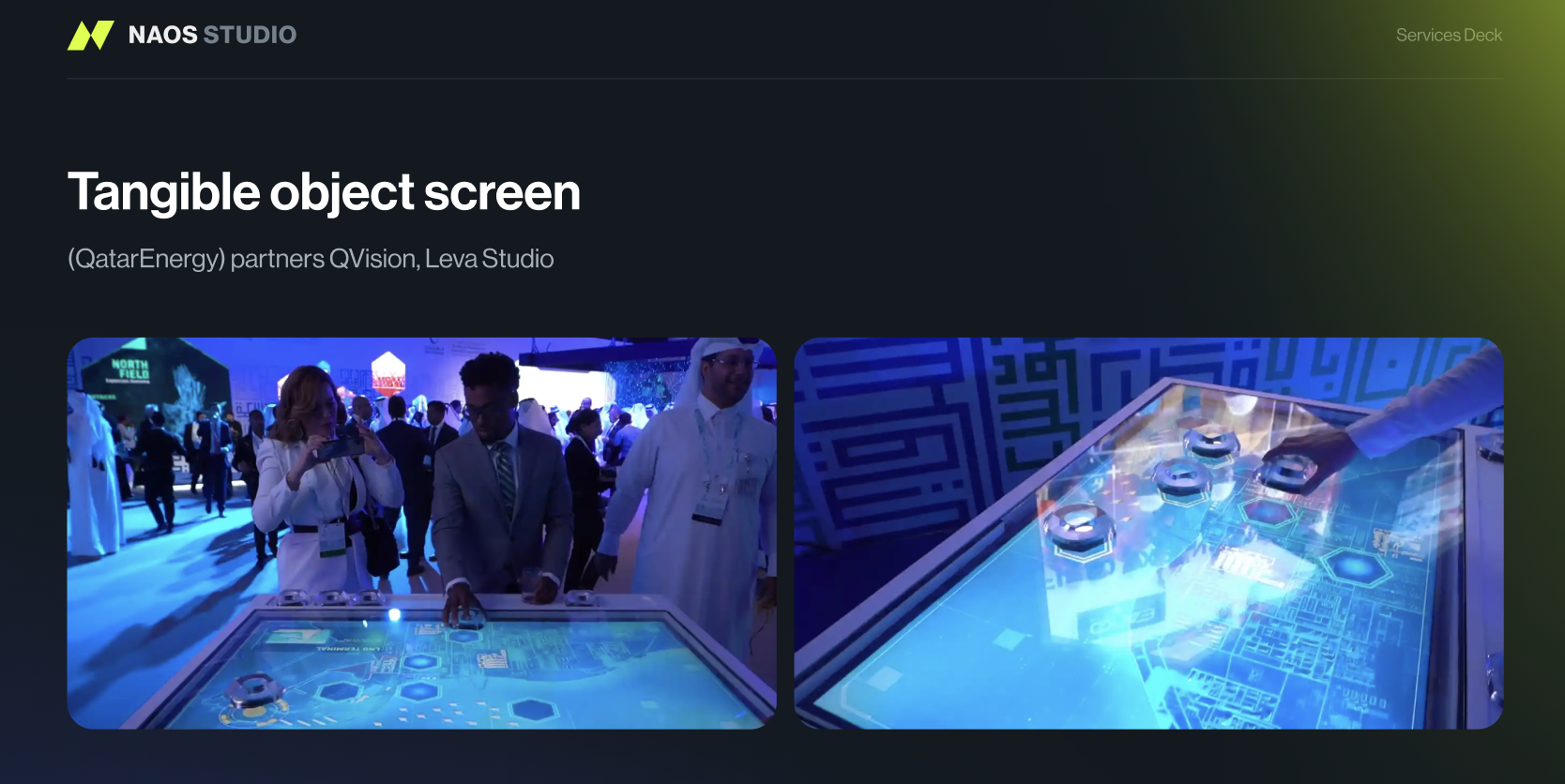
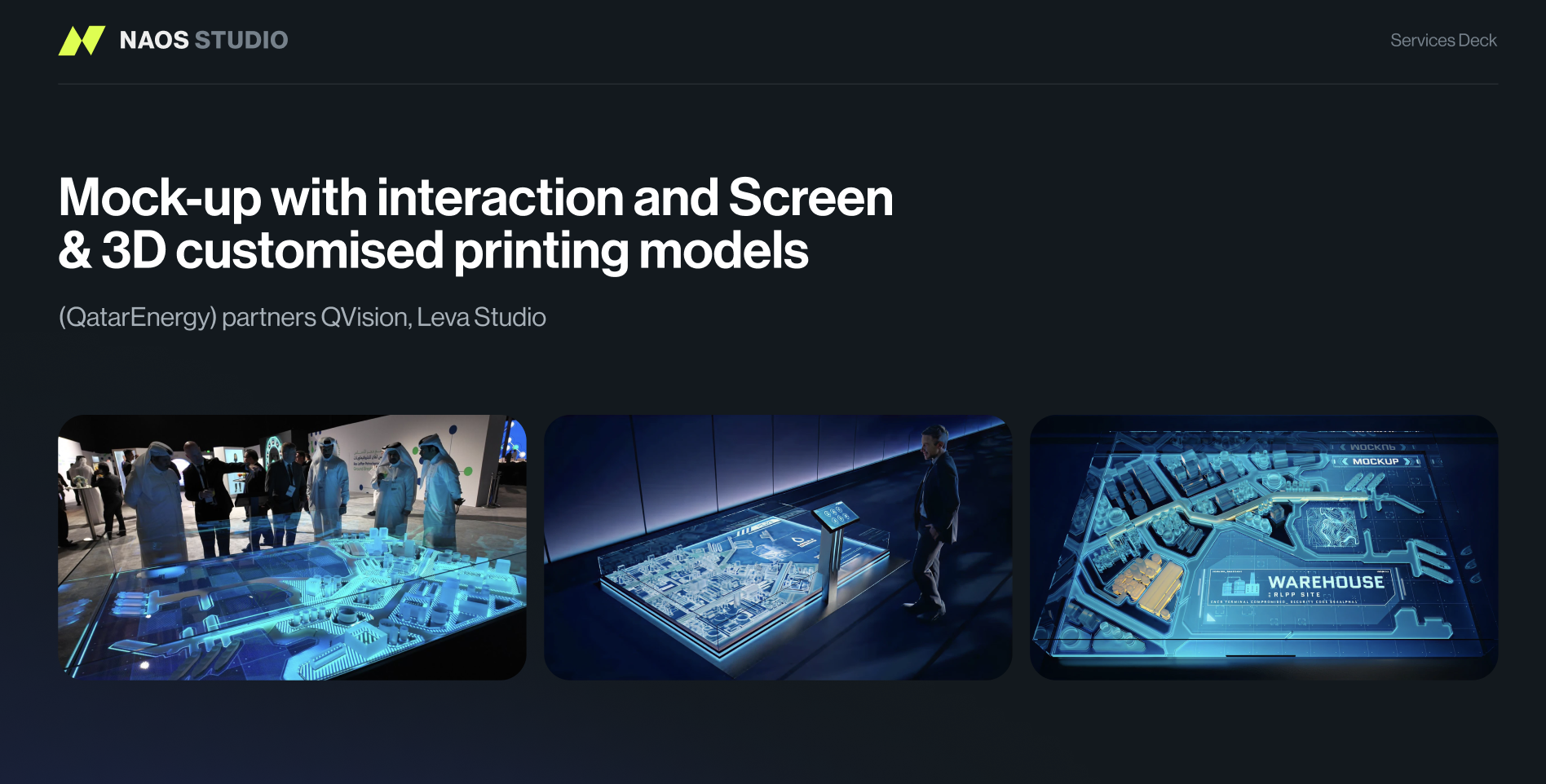
an interactive holographic setup can reveal complex processes in a way that feels intuitive, not instructional
Every element has a task. Our responsibility is to solve that task in the most elegant and effective way.
One of the key principles we work with is spatial tension. Not all moments in a space should feel the same. Some moments invite rest. Some invite curiosity. Some invite dialogue. Some invite understanding.
In large-scale corporate or museum environments, this becomes especially important.
A space explaining complex systems, energy, infrastructure, technology, cannot rely on static information. It must:
guide attention
release tension
rebuild focus
and allow understanding to unfold naturally
This is where immersive mock-ups, layered projections, and spatial storytelling become powerful tools, not effects.
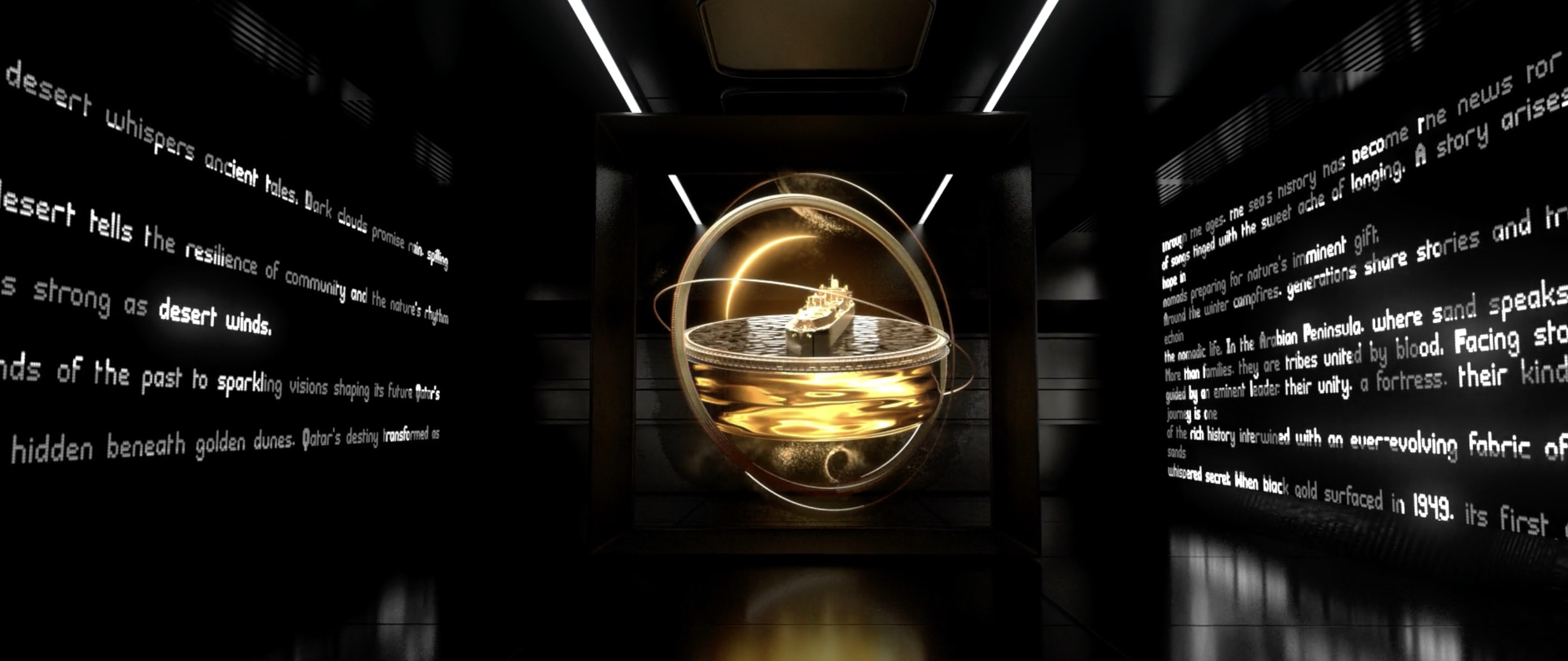
In projects for energy, architecture, and public infrastructure, immersion serves a very clear purpose:
to make complex ideas visible and human.
Mock-ups, holographic layers, and spatial narratives allow people to:
see processes instead of reading about them
understand systems instead of memorizing facts
connect emotionally to subjects that are often perceived as abstract
Immersive content becomes a translator between expertise and perception.
For us, an immersive space is a living system. People are not just present in it — they participate, even when interaction is subtle. Whether we are designing a playful environment or a formal corporate installation, the goal remains the same: to create a space where people are not just located, but involved.
That is where immersion truly begins.
NAOS STUDIO



 Publish
 Videos
 Articles
 Events
 EN
EN

Comments
Please Log in or Register to comment