


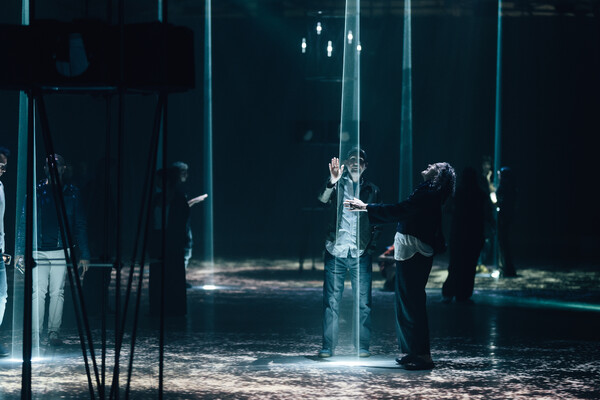
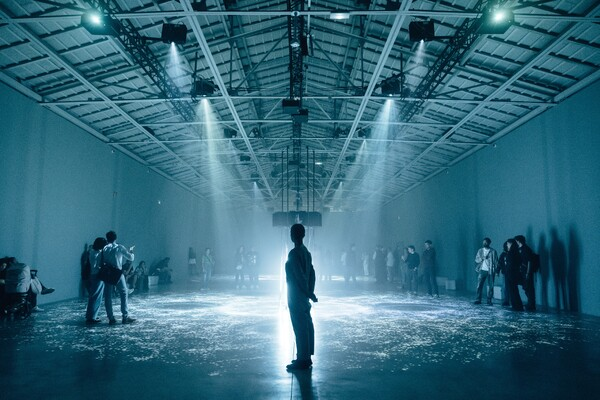
How can we understand immersive video spaces in a world where technology, art, and human interaction seem to be increasingly intertwined? At Radiante Light Art Studio, our work "Verge" has led us to reflect on the countless directions these spaces could take in the future.
Audiovisual technology is a part of our daily lives, but how does our perception change when it is integrated into immersive environments? What are the differences in experiences between younger generations, who seem more interested in dynamic and interactive narratives, and older generations, who perhaps value a more contemplative connection? Is it possible to design spaces that resonate with such diverse audiences?
Looking to the future raises exciting questions. Could these tools merge the physical and the digital in unprecedented ways, opening doors to completely new sensory experiences? In this context, what implications does the integration of these technologies have for creating layers of fiction that constantly blur the line between the real and the imagined?
When considering the design of these spaces, should the focus be purely aesthetic or on the construction of meaningful narratives? Is there a balance between both dimensions, or does it depend entirely on the expectations of the viewer? What are we truly seeking: the pleasure of the visual, a captivating story, or a fusion of both elements?
Immersive spaces also invite us to reflect on their potential beyond art and entertainment. Are immersive video spaces destined to transform areas such as education, reconfiguring classrooms into historical or futuristic scenarios? Could they play a role in health, creating relaxation or therapy environments? To what extent could they enrich corporate presentations or collaborative workspaces? Will they become everyday tools, fully integrated into our lives? Or will the high maintenance of this technology make it unfeasible in the medium term?
At Radiante Light Art Studio, we continue to explore these questions. Should we aim for an almost perfect imitation of reality, or would it be more interesting to create dreamlike landscapes that challenge our perception? What is the boundary between what we consider real and what we accept as fiction? Perhaps there is no single answer. Maybe the future of immersive spaces does not lie in finding certainties, but in keeping the curiosity alive to imagine new ways of experiencing the world.
Radiante



 Publish
 Videos
 Articles
 Events
 EN
EN

Comments
Please Log in or Register to comment