


A remarkable artistic feat quietly unfolded under the celestial stars on January 11. "Ba Huang", an AI artwork meticulously crafted by Chinese artist Chen Tianchan, ascended gracefully into the azure orbit of Earth, powered by the might of a rocket. The artwork’s journey into space is not just a voyage of a creation; it marks a significant stride in the confluence of culture and technology by humanity. The successful launch of "Ba Huang" not only highlights the boundless potential of artificial intelligence in artistic creation but also weaves human emotions and dreams into the fabric of interstellar exploration. Its journey is more than a mere display of technology; it is a poetic odyssey of self-discovery and cosmic exploration, painting a new and magnificent panorama of our quest in the universe and cultural cognition.
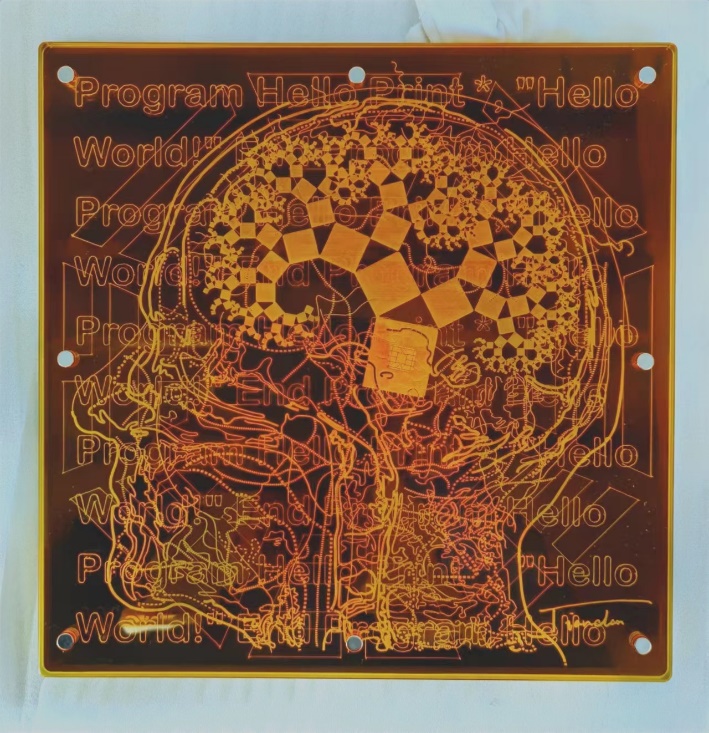
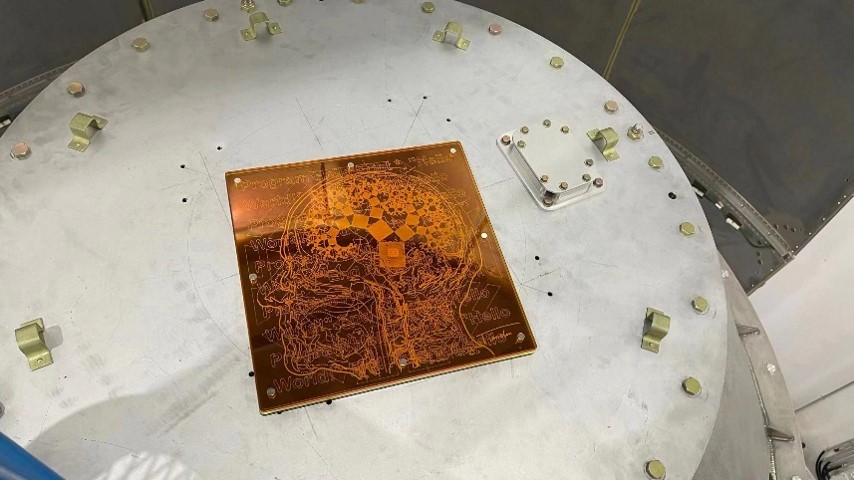
"Ba Huang," a 30x30 cm art piece composed of three layers of colored acrylic, presents a unique visual effect. Each layer of acrylic signifies a different dimension: the middle layer in fluorescent green, carved with human figures, symbolizes the tangible physical world; the blue layer represents the spiritual realm, adorned with the Taiji symbol, reflecting the profound essence of "Ba Huang"; while the outermost layer in orange represents the unknown world, etched with the code of one of humanity's earliest computer programs: "Hello World." The interior of the work employs precise laser engraving techniques to depict the intricate neural and vascular structures of the human brain, revealing a complex and delicate biological architecture. Embedded within these fine textures is a memory chip, loaded with an artificial intelligence language model developed under the aegis of artist Tianchan Chen. Over the past six months, this model has engaged in continuous and in-depth dialogue and exchange with the artist, chronicling his profound reflections on the future impact and potential risks of artificial intelligence, as well as feedback from the AI itself.
Artificial Intelligence Artwork "Ba Huang"
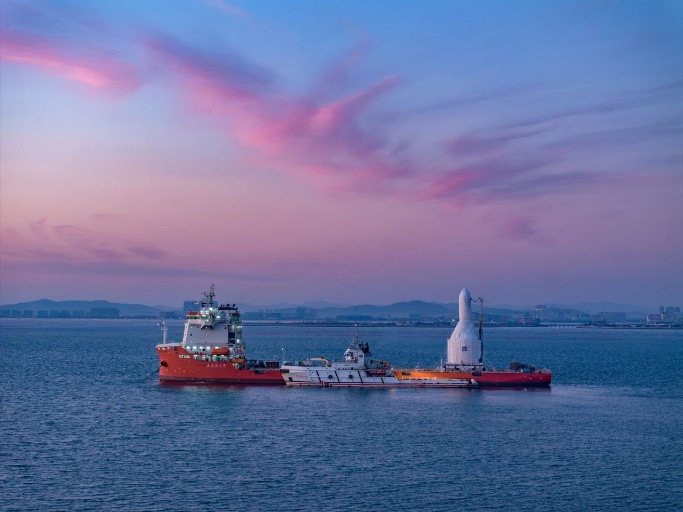
January 11th is a day destined to be etched in the annals of art and technology integration. In the waters off Laiyang, Shandong Province, a vessel quietly floated on the shimmering sea, bearing witness to this extraordinary launch. On this day, a solid-fuel rocket, carrying the unique artwork "Ba Huang," ascended from this ship into space. This event was not just an ordinary space launch; it set two significant milestones: "Ba Huang" became the first AI-created artwork in human history to enter space. Simultaneously, it marked the first-time humanity sent an artwork of such substantial size into Earth's orbit, where it is set to remain for over twenty years.
Rocket waiting to be launched
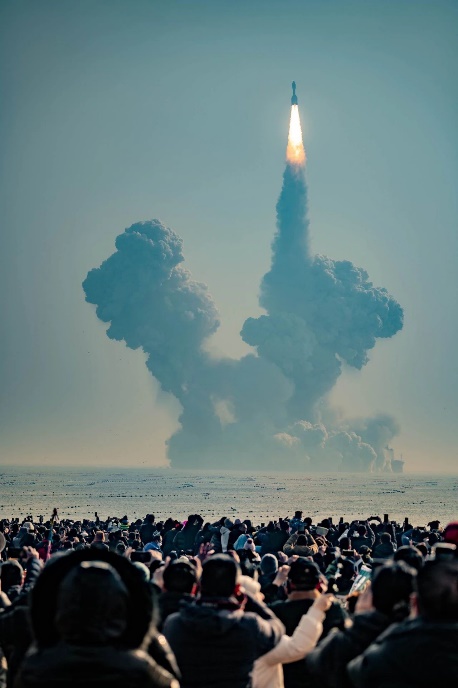
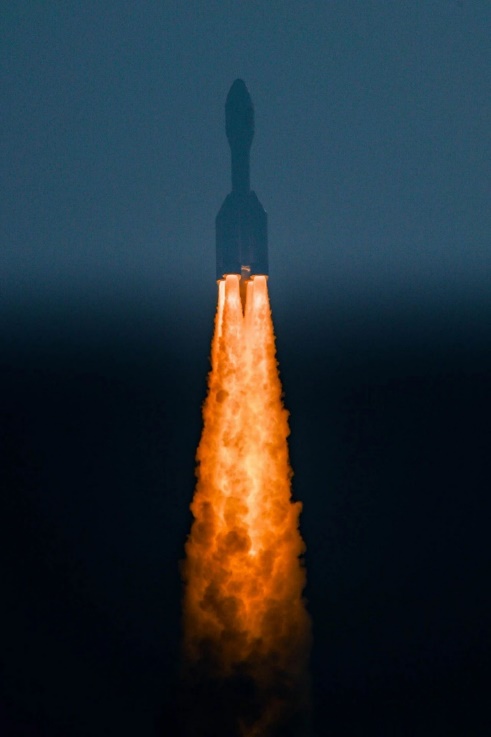
The sky was clear and the sea breeze gentle, as if nature itself was preparing for this historic moment. As the countdown concluded, the rocket launched, piercing the sky and embarking "Ba Huang" on its maiden voyage into the unknown realms of space. The choice of a solid-fuel rocket, selected for its simplicity in preparation and high reliability, also provided the powerful and stable thrust necessary to smoothly guide "Ba Huang" into its designated orbit. At this moment, all those witnessing the event held their breath in awe, observing the birth of this groundbreaking achievement.
The launch process itself was exceptionally smooth, with the rocket following a precise trajectory and its propulsion system operating flawlessly. This event was not only a testament to the rocket's technology and the team's execution but also a major test of the durability of the artwork "Ba Huang." At this significant juncture, the perfect amalgamation of technology and art not only successfully sent "Ba Huang" into space but also provided a vivid example of the new frontiers in the exploration of the integration of art and technology by humanity.
The sizeable audience witnesses the rocket launch
The over twenty-year sojourn of "Ba Huang" in space serves not only as a test of its physical endurance but also as an experiment on how art and technology can jointly adapt to extreme environments. During this period, "Ba Huang" will act as a unique observational point. The changes in its existence and condition will provide invaluable data on how an artwork reacts and adapts to the space environment. This information will offer critical insights for future choices in materials, design approaches, and protective measures for artworks destined for such challenging settings.
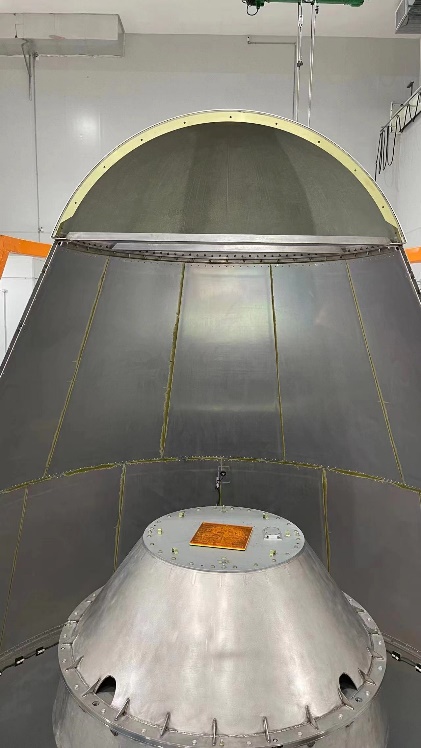
"Ba Huang" rests inside the nose of the rocket
As an artwork in space, "Ba Huang" also becomes a continuous signal emitted into the universe, representing a facet of human civilization. Its existence is not merely an artistic expression into outer space, but a profound contemplation of human culture, technological advancement, and their interplay. In the long run, the space journey of "Ba Huang" may inspire more collaboration between artists and technology experts, exploring new realms in the fusion of art and technology, and propelling the infinite possibilities of human cultural and technological evolution.
When introducing this work, Tianchan mentioned that his inspiration came from an article titled "ChatGPT is a Fuzzy Image of the Internet" by Ted Chiang, which delves deeply into how large model manufacturers use internet information to train their models. This reminded Chen of the concept of "circular reasoning" discussed in his mathematics studies, closely aligning with the potential outcomes of large models trained through internet information. In the modern era, as more AI-generated content is uploaded to the internet, the human ability to distinguish between reality and fiction may gradually blur, especially for future generations who grow up with generative AI content. Tianchan warns that this phenomenon could eventually bind human cognition and knowledge networks in a circular reasoning of "questioning AI" and "training AI with the internet."
During the conception of "Ba Huang," Tianchan was deeply influenced by his mentor's friend, bio-artist Eduardo Kac, and his space art projects. Eduardo's work not only pioneered a new field at the intersection of art and science but also represented a revolutionary challenge to traditional art forms. Contemplating how to express his concerns about AI potentially turning the world into a vast "information cocoon," Tianchan had a flash of inspiration: why not follow in Eduardo's footsteps and send his artwork into space?
While studying AI algorithms at MIT, Tianchan deeply realized the difficulty of breaking the "information cocoon" from within. This realization prompted him to view "Ba Huang" as a unique artistic practice - sending it off Earth into space. This idea critiques the existing technology and information environment and innovates in artistic expression. Thus, the space journey of "Ba Huang" becomes a unique space-floating archival document, artistically recording and reflecting on the current technological milieu.
"Ba Huang" Awaiting Installation within the Rocket
Sending "Ba Huang" into space is not merely an extreme display of its artistic value, but also a profound reflection on the role of artificial intelligence in human civilization. Through this act, Tianchan Chen hopes to spark a broader dialogue and contemplation about how artificial intelligence shapes our worldview, and how we find our place in an era profoundly influenced by AI.
"Ba Huang" commences its sojourn aboard the rocket to space
Following the successful launch of the artwork "Ba Huang," art experts and practitioners from the world have been sending their congratulations. Andrew Deutsch, a renowned American sound artist, highly praised this initiative: "Sending 'Ba Huang,' an artwork of such innovative nature into space, is a tribute to the human spirit of artistic exploration. This piece not only breaks through in art but also in technology and exploration. I respect Tianchan Chen for bridging the gap between the art and tech communities and am excited about the new ideas and possibilities it brings."
Additionally, Elizabeth Hall Meyer, a professor at Cornell University; Joseph Scheer, known as the father of digital printmaking; and Chen Xiaowen, a lifetime professor at Alfred University in the USA, and other prominent figures in the art world, have also expressed their warm congratulations and support for the space journey of "Ba Huang." They believe that the successful launch of "Ba Huang" is not only a challenge to human exploration of the universe and the limits of artistic expression but also an inspiration for the future development of the integration of art and technology.
These blessings and evaluations from the art community highlight the significance of "Ba Huang" as a paradigm of the fusion of art and technology for future artistic exploration and technological development. The comments from Andrew Deutsch and other artists not only represent appreciation for Tianchan's innovative spirit but also reflect the art community's widespread recognition of "Ba Huang's" space journey and anticipation of future possibilities.
In this era of increasingly enclosed information cocoons, the space journey of "Ba Huang" is not just a physical breakthrough but also a challenge and expansion of the boundaries of knowledge, culture, and artistic perception. It is more than just the floating of an artwork; it represents humanity's profound reflection and exploration of the future, the universe, and our place in the era of artificial intelligence.

Enjoy AI, Enjoy Art



 Publish
 Videos
 Articles
 Events
 EN
EN
Comments
Please Log in or Register to comment